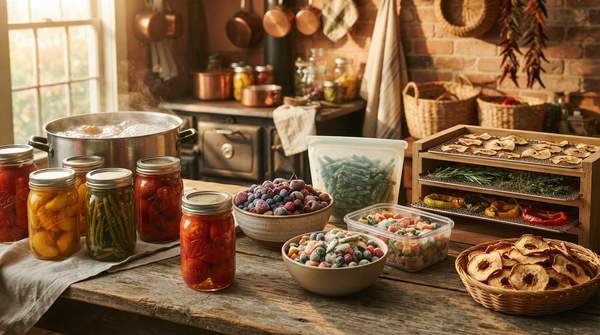
If your goal is maximum nutrition with minimum fuss, freezing is your best bet. If you want shelf-stable jars that survive a power outage, canning earns its nutrient losses. And if you need something simple and inexpensive that shrinks your harvest into a small package, drying is the method for you. The trade-off between these three home preservation methods comes down to one scientific fact: water-soluble vitamins like C and the B family are fragile, while fat-soluble compounds like carotenoids and lycopene are surprisingly tough. Here is how each method stacks up.
Understanding Nutrient Vulnerability in Food Preservation
Not all nutrients behave the same way in a jar, freezer, or dehydrator. Water-soluble vitamins—including folate, thiamine, and vitamin C—dissolve in water, which makes them less stable and more vulnerable during processing, as Baptist Health's nutrition team explains. Fat-soluble vitamins A, D, E, and K dissolve in fat and hold up better under cooking and preserving.
Three forces do the damage. Heat destroys sensitive vitamins: vitamin C is water-soluble and extremely sensitive to high temperature, light, and oxygen, with losses ranging from 15 to 55 percent during cooking and 10 to 90 percent during canning, according to a peer-reviewed review of nutritional decline in processed foods. Water leaches nutrients away: Neelesh Kumar Maurya, a nutrition and dietetics professor at Sharda University, identifies water leaching as one of the major causes of nutrient loss in food preparation, since water-soluble vitamins simply dissolve out. And oxidation degrades what heat and water leave behind.
Canning: Heat, Water, and Nutrient Impact
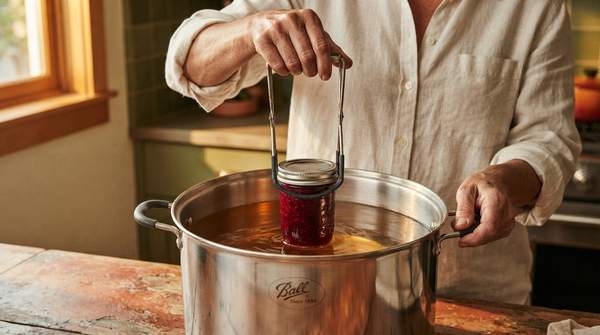
Canning is the hardest method on fragile vitamins. Colorado State University Extension reports that vitamin C and the B vitamins decrease during the canning process, and the review data confirms the magnitude: 10 to 90 percent of vitamin C can be lost. The combination of sustained high heat and immersion in water hits water-soluble nutrients from both directions.
But canning is not a nutritional write-off. Vitamins A, E, and K, along with carotenoids, are more stable, and lycopene—the red pigment in tomatoes—actually becomes more bioavailable when released by cooking and canning. That is why you may have heard that canned tomatoes deliver more lycopene than fresh ones, a point Colorado State University Extension makes directly. Once food is sealed, further losses are minimal, giving preserved goods a long nutrient shelf life.
The costs beyond nutrients are real: Illinois Extension describes canning as time-consuming, requiring an initial investment in equipment—boiling water bath, pressure, or steam canners—plus airtight containers and careful attention to tested recipes, since small measurement or timing variations can produce an unsafe product.
Freezing: Preserving Freshness and Nutrients
Freezing is the standout for nutrient retention. Illinois Extension calls it an easy, convenient method that requires less time and delivers fresh flavor and higher nutritional value than other preservation methods. West Virginia University Extension agrees: freezing retains foods' natural color, flavor, and nutritive value.
Maurya's review notes that freezing retains most nutrients, though minor losses can occur during pre-freezing steps like blanching—again, it is the water contact and heat before the freeze that trim the water-soluble vitamins, not the freezing itself. Practical strategies include keeping blanching and washing times short, using light-blocking and oxygen-reducing packaging, and vacuum sealing.
Equipment demands are modest. You need a freezer and containers, and as West Virginia University Extension points out, amounts can be adapted to suit individual or family needs. The trade-offs are freezer space, electricity dependence, and the blanching step most vegetables require.
Drying: Concentrating Flavor, Altering Nutrients
Drying is the oldest method on the list, and West Virginia University Extension describes it as safe, simple, and inexpensive. Illinois Extension adds that it requires minimal equipment and produces food that takes up little storage space—an advantage when your pantry, not your freezer, is the constraint. Dried fruits, the Extension notes, retain nutritional quality and are popular with people seeking more antioxidants in their diets.
Nutrient impact sits between the other two methods. Because drying involves heat and prolonged air exposure, oxidation is a primary concern, so the extent of nutrient loss depends on the specific temperature and drying conditions. Fat-soluble vitamins and minerals fare better than water-soluble ones, but drying does not spare vitamin C the way a quick freeze does. Slow, low-heat drying and oxygen-limiting storage help minimize the damage.
Choosing Your Preservation Method: A Comparative Framework
Here is the side-by-side view of the three methods, built from university extension guidance and the scholarly reviews of nutrient loss cited above. Use it to match a method to your priorities: vitamin retention, equipment budget, or time.
| Preservation Method | Impact on Water-Soluble Vitamins (C, B) | Impact on Other Nutrients (e.g., Lycopene) | Required Equipment | Relative Time Commitment |
|---|---|---|---|---|
| Canning | Significant loss—vitamin C drops 10–90 percent; B vitamins also decrease under heat and water. Further loss is minimal once sealed. | Fat-soluble vitamins and carotenoids relatively stable; lycopene becomes more bioavailable. | Boiling water bath, pressure, or steam canner; airtight jars; tested recipes for safety. | Most time-consuming of the three. |
| Freezing | Generally well retained; minor losses during pre-freezing blanching. | Minimal loss of vitamins and minerals overall. | Freezer and containers; no specialized canning gear; amounts adaptable. | Fastest and easiest method. |
| Drying | Losses occur from heat and oxidation; extent depends on drying conditions. | Dried fruits retain nutritional quality, including antioxidants. | Minimal equipment; dried food takes up little storage space. | Simple, but longer than freezing. |
The pattern in the table follows the science directly: the more heat and water a method applies, the more vitamin C and B vitamins you sacrifice. Canning, which submerges food in hot water or steam for an extended process, loses the most. Freezing skips both, apart from a brief blanch. Drying avoids water but introduces heat and oxygen exposure over a longer period.
Making Your Preservation Choice
The decision framework is straightforward: choose freezing for maximum nutrient retention and minimal time commitment, canning for shelf-stable storage despite greater vitamin loss, or drying for simple, inexpensive preservation with a moderate nutrient impact. If your harvest includes tomatoes, remember that canning has a unique upside—more bioavailable lycopene. One caution applies across all three: Illinois Extension and Colorado State University Extension both insist on scientifically tested recipes and exact processing directions, because safety, not nutrition, is the first gate a preserved food must pass.
You will know you have chosen well when the method you select matches your priorities on all three dimensions—nutrient impact, equipment, and time—and the preserved food is safe to eat months later. That alignment, not any single number on a nutrition label, is the measurable indicator of a successful preservation season.