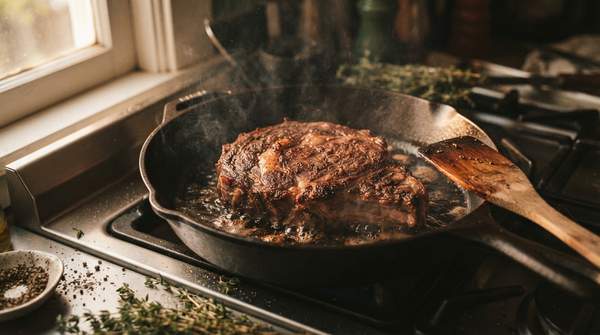
The secret to a deeply browned crust, a rich sear, and the mouthwatering aroma of roasted food is a single chemical process: the Maillard reaction. It happens when amino acids—the building blocks of proteins—react with reducing sugars like glucose and fructose under heat. And once you understand the three variables that govern it—temperature, moisture, and pH—you can stop following browning tips blindly and start troubleshooting any ingredient in your kitchen.
The Magic of Maillard: Beyond Simple Browning
Many cooks assume browning is browning, but the Maillard reaction is something far more interesting than a color change. As Nicholas Gillitt, chief science officer at the David H. Murdock Research Institute, explains, the reaction's products carry "all sorts of flavors and aromas depending on the individual compounds that end up reacting," and these products typically enhance the taste and smell of food, making it far more enticing than the same food cooked in water.
That contrast is the reaction's signature. The culinary team at Modernist Cuisine points out that the Maillard reaction, or its absence, is what separates the flavor of boiled, poached, or steamed foods from the same foods grilled or roasted at temperatures high enough to dehydrate the surface rapidly—above the boiling point of water. A poached chicken breast and a roasted one are chemically different dishes, and the difference is written in brown.
It's also worth distinguishing Maillard browning from simple color change for its own sake. A scientific review of the reaction notes that it is responsible for desirable sensory qualities—flavor, aroma, color, and texture—in cooked and thermally processed foods. The brown surface is evidence; the flavor compounds are the prize.
The Chemical Dance: How Maillard Works
At its core, the reaction is a conversation between two partners. On one side are amino acids, which form the backbone of proteins; on the other are reducing sugars, such as glucose and fructose, that occur naturally in most foods. When heat brings them together, they react and produce the brown pigments and hundreds of aromatic compounds we associate with cooked food.
But this conversation only happens under the right conditions. The review literature identifies temperature, reaction time, and water activity as parameters that significantly influence how the reaction proceeds, and understanding their impact is essential for optimizing the sensory qualities of cooked food. In practical terms: heat supplies the energy, time allows the flavor compounds to develop, and moisture determines whether the food's surface can ever get hot enough for the reaction to matter.
That last point is the one home cooks most often miss. As long as a food's surface is wet, evaporation pins its temperature near the boiling point of water, and the Maillard reaction proceeds only sluggishly. This is why steaming and boiling produce pale, mild-flavored food, and why the first step toward browning is almost always drying.