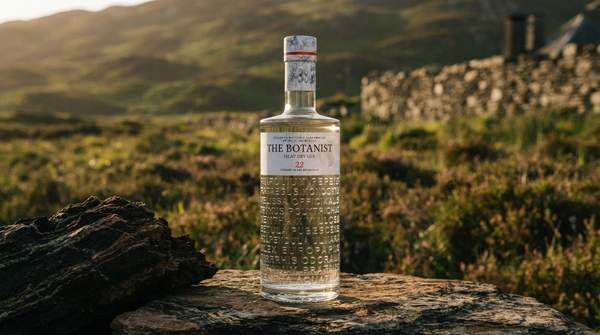
The same handful of juniper berries, peels, and flowers can end up tasting dense and juniper-forward in one bottle and bright, floral, and delicate in another. The difference often lies less in the recipe than in how the distiller extracts it. Gin's three main production routes—steeping botanicals directly in the spirit, passing alcohol vapor through them, or distilling under vacuum at low temperature—each pull a different spectrum of flavor compounds from identical ingredients. Understanding that mapping, from method to mouthfeel, is the key to reading a gin bottle before you ever pour it.
Distillation Methods: Shaping Gin's Flavor Profile
Every distilled gin begins the same way: neutral alcohol meets botanicals, and something has to carry the plants' aromatics into the finished spirit. How that transfer happens is where flavor diverges. Writing about the science of botanical extraction for SevenFifty Daily, Jake Emen reports on side-by-side trials whose results, in the words of one distiller, "were astounding. The very same botanical vapor distilled at a lower temperature resulted in a lighter structure, more delicate extraction"—while "maceration distillation retains much more of the botanical oils, giving a bigger body and mouthfeel and often more pronounced and dense botanical flavors."
Part of the explanation is chemical. Distillers note that some aromatic compounds, such as limonene from lemon peel, are water-soluble, while others, such as the pinene behind juniper's pine character, need alcohol to be extracted at all. Heat, contact time, and whether the botanical touches liquid or vapor all shift which of these compounds make it into the final distillate. Industry primers describe the common steep-and-boil approach as comparable to making tea: botanicals added to alcohol, heated, and distilled—an effective, thorough extraction. Vapor distillation and vacuum distillation offer gentler alternatives with noticeably different results.
Gin Distillation Methods: A Flavor Comparison
| Distillation Method | Process Description | Effect on Botanicals | Resulting Flavor Profile |
|---|---|---|---|
| Steep & Boil (Maceration) | Botanicals steep directly in the neutral spirit, then the whole is heated and distilled—an approach compared to making tea. | Retains much more of the botanical oils; extracts heavier, oil-based compounds. | Dense, pronounced botanical flavors with bigger body and mouthfeel; robust and traditional, often juniper-forward. |
| Vapor Infusion | Botanicals sit in a basket above the spirit; alcohol vapor passes through them, picking up aromatics before condensing back to liquid. | Extracts lighter, more volatile aromatic compounds; yields a delicate extraction with a lighter footprint. | Bright, lifted aromas; a lighter, more delicate gin that tends to emphasize floral or citrus notes. |
| Vacuum (Cold) Distillation | A low-pressure vacuum reduces the boiling point, so distillation occurs at a much lower temperature. | Botanical flavors are maintained without significant heating, preserving delicate fresh character—though this is a distillers' claim rather than an independently verified result. | Fresh, subtle notes; suited to preserving the raw character of fragile botanicals. |
Read down the final column and the pattern emerges: the more heat and direct liquid contact, the heavier the extraction; the gentler the method, the lighter and fresher the resulting gin. A bottle labeled as vapor infused or cold distilled will, as a general rule, lean delicate, while a classically macerated gin will lean dense.
Steep & Boil (Maceration): Robust and Deep Flavors
Maceration is the oldest and most common route, and it behaves like a long, hot tea steep. Because the botanicals sit submerged in alcohol before and during distillation, the spirit pulls out the full range of a plant's compounds—including the heavier oils that gentler methods leave behind. That is precisely why distillers describe macerated gins as having weight: more body, more mouthfeel, and denser flavor.
Juniper illustrates the effect. Its signature pine character comes largely from pinene, a compound that, as one distiller explained to SevenFifty Daily, is not water-soluble and needs alcohol to be extracted. Maceration gives that alcohol ample time and heat to do its work, which is one reason traditional steep-and-boil gins tend toward that robust, juniper-led profile: the backbone botanical gets a full, unhurried extraction, and supporting botanicals extract just as thoroughly. This is a general principle, and specific botanical combinations and distiller techniques will influence the final outcome, but the direction is consistent.
Vapor Infusion: Bright and Delicate Aromas
Vapor infusion flips the geometry. Instead of drowning the botanicals, the distiller suspends them above the spirit so that only alcohol vapor passes through them on its way to condensation. Contact is brief and there is no boiling liquid pressing against the plant material, so the vapor picks up chiefly the lighter, more volatile aromatic compounds—the ones that read as lift and brightness on the palate.
The trials Emen describes showed the same botanical emerging with a "lighter footprint" under vapor distillation: distinct, but ethereal rather than dense. The trade-off is straightforward. What you gain in delicacy you can lose in depth; heavier oil-based compounds stay behind in the basket. That makes vapor infusion especially suited to aromatics a distiller wants to showcase without cooking—delicate floral or citrus notes benefit most. Many major producers, Emen notes, use a combination of methods, macerating some botanicals and vapor-infusing others to build both weight and lift into a single gin.
Vacuum (Cold) Distillation: Preserving Freshness
The third route attacks the variable at the heart of the other two: heat. In vacuum distillation, a low-pressure environment lowers the alcohol's boiling point, so the spirit distills at a much cooler temperature—hence the alternative name, cold distillation. As Eight Oaks Farm Distillery's Josh Van Den Berg explains, distillers using this method claim it is better because "the flavor from the botanicals is maintained without heating." That claim belongs to the distillers themselves rather than to independent testing, but the logic is coherent: fragile compounds that heat would alter or destroy survive the trip into the final spirit.
The payoff, when the method works as intended, is freshness. Botanicals that might turn stewed or cooked under traditional methods—their bright top notes flattened by prolonged heat—can retain something closer to their raw character. The same caveat applies across every method in this article: these are general principles, and a specific distiller's recipe, cut points, and technique will always shape the final glass.
Gin Styles: A Blend of Botanicals and Methods
These production choices crystallize into recognizable styles. London Dry is the strictest: as Phil Ejzak explains, a gin made anywhere in the world can carry the label as long as all botanicals are added during distillation, nothing artificial is added afterward, and only a trace of sweetening remains. In practice, that means the entire flavor must come from botanical extraction in the still—which is why the method-flavor mapping matters most here. A macerated London Dry will read dense and juniper-led; a vapor-infused one will read brighter, even with the same core botanicals.
Old Tom sits at the opposite regulatory pole. Writing for Blackcat Distillery, Clare notes there are "barely any regulations for making an Old Tom Gin"—it can be aged or not, sweetened or not, neutral-based or not—though juniper should remain dominant and the spirit must reach at least 37.5% ABV. Historically a sweetened, less botanically heavy style, it is often seen as the bridge between Dutch genever and London Dry, with sweetness historically from added sugar or sweet-reading botanicals. Meanwhile, flavored and infused gins, as Hush and Whisper Distilling Co describes, lean into citrus, floral, or fruit-driven notes—precisely the delicate aromatics that vapor and cold distillation are built to preserve.
Predicting Your Next Gin: Method and Botanicals as Your Guide
When selecting a gin, consider the distillation method and botanical list to predict its flavor profile, opting for macerated gins for robust tastes or vapor/cold distilled for lighter, fresher notes. The measurable indicator is the stated distillation method (e.g., "London Dry", "Vapor Infused", "Cold Distilled") and prominent botanicals on a gin bottle's label. Pour two gins side by side—one steeped and boiled, one vapor infused—and the difference should register in seconds: density versus lift, weight versus brightness. Once you can read those signals on a label, every bottle on the shelf becomes easier to predict before the first sip.
Sources
- The Science of Botanical Extraction in Gin Distillation — SevenFifty Daily
- Extracting Flavor – Future Proof — Futureproof
- London Dry vs New Western vs Old Tom Gin: Which Style Is Right for You — Armen's Barrels
- The Many Gin Styles Explained. - Blackcat Distillery
- Gin Botanicals: Understanding Flavor Profiles | — Hush and Whisper Distilling Co