A shrub is a sweet-tart fruit syrup built on three humble ingredients—fruit, sugar, and vinegar—and its history is really several histories braided together. The word has described an English alcoholic cordial, an American preservation method, and today's craft-cocktail and mocktail ingredient. Understanding those phases is the key to making your own, because the modern shrub you'll build on your counter is the direct descendant of a vinegar-and-fruit technique that began in 17th-century England and crossed the Atlantic to colonial America.
The Ancient Roots and English Beginnings of Shrub
The word itself arrived late, even if the drink's ancestors were older. According to Tim Oakley's history for Difford's Guide, the first mention of "shrub" in the English dictionary came in 1747, where it was defined as "any of various acidulated beverages made from the juice of fruit, sugar, and other ingredients often alcohol." In the English sense, shrubs were a form of cordial, a family of drinks that had been developing in England since the late 15th century.
These early shrubs were not the bright syrups we know today. They were alcoholic medicines, used to revitalise the heart, body and spirit and to cure disease. Oakley ties their spread through England to the rise of smuggling, which developed in the 1680s when high taxes on luxury imports such as tea, brandy, rum and genever created a vigorous black market in spirits that cordials could mask and enhance.
There is also a Middle Eastern thread in the shrub's lineage. Writing at Liquid Culture, Monica C traces a parallel tradition in which spices, herbs and fruit were combined so that Muslims could enjoy a refreshing beverage within their cultural guidelines. She notes that water contamination was a common issue of the era, limiting safe daily fluids, and that shrub-style drinks quenched thirst while remaining safe to drink. The name itself echoes the Arabic "sharāb," a drink—though the English and American traditions each took the idea in their own direction.
Shrubs in Colonial America: A Preservation Necessity
The shrub that home makers recognize today was born of practical necessity, not medicine. In 17th-century England, vinegar was used to preserve fruits like berries for the off-season, a practice that became known as shrubs and was adopted in colonial America.
This is the crucial turn in the story: the shrub became a household preservation technique. Before refrigeration, steeping fruit in vinegar was a way to capture the harvest and carry it through lean months. The resulting syrup could be mixed with water or spirits, turning a stored preserve into a refreshing drink at a moment's notice.
By the 19th century, the American method had settled into a recognizable rhythm. Typical recipes used vinegar poured over fruit—traditionally berries—which was left to infuse anywhere from overnight up to several days. Afterwards, the fruit was strained out, and the remaining liquid was mixed with a sweetener such as sugar or honey and then reduced to make a syrup. That sequence—infuse, strain, sweeten, reduce—remains the backbone of shrub-making today, even if modern cold-process versions often skip the final reduction.
From Decline to Revival: Prohibition and Modern Craft
Refrigeration nearly ended the shrub. As Madeline Kuluris recounts for The Curious Cabinet, the advent of modern refrigeration and commercial preservatives sent shrubs out of widespread use, though their unique flavour profile never entirely disappeared. A drink born of scarcity struggles when scarcity ends.
But the shrub found an unlikely second life during the temperance and Prohibition era. As Monica C observes, a generation practicing abstinence was looking for a viable, tasty, non-alcoholic beverage to enjoy. Shrubs were commonly imbibed on their own as a practice of abstinence, and they also became a common ingredient in cocktails—flavouring spirits at a time when quality was unreliable.
The most recent chapter is the one unfolding now. Kuluris describes how growing interest in craft cocktails, artisanal beverages, and health-conscious drink alternatives has led to a resurgence of shrub syrups. Today they are added into cocktails to lend acidity and complexity, drizzled over salads or desserts for a tangy twist, and used in marinades and sauces to enhance savoury dishes. Bartenders and home enthusiasts alike prize that sweet-tart depth, which is precisely what the vinegar was doing all along.
The Evolving Story of Shrub Syrups
Sequencing these accounts side by side shows how one word has described genuinely different beverages, and how each phase contributed something the modern shrub retains.
| Period | Form | Key Characteristics |
|---|---|---|
| Late 15th–18th century England | Alcoholic cordial | Cordials developed in England from the late 15th century; the word "shrub" was first recorded in English in 1747, defined as an acidulated beverage often containing alcohol. Used as alcoholic medicines to revitalise the heart, body and spirit. |
| 17th-century England to colonial America | Fruit preservation | Vinegar used as an alternative to citrus juices to preserve berries and other fruits for the off-season; the preserves themselves were called shrubs, and the practice carried over to colonial America. The syrup could be mixed with water or spirits. |
| 19th-century America | Fruit-vinegar syrup | Vinegar poured over fruit—traditionally berries—infused overnight to several days, then strained and mixed with sugar or honey and reduced to a syrup, used as a refreshing drink mixer. |
| Prohibition era (1920–1933) | Temperance drink and cocktail ingredient | After decline driven by modern refrigeration and commercial preservatives, shrubs regained popularity among a generation practicing abstinence, drunk on their own and used in cocktails. |
| Modern era | Craft beverage ingredient | Revived by interest in craft cocktails, artisanal beverages and health-conscious alternatives; valued for acidity and complexity in drinks, and used over salads, desserts, in marinades and sauces. |
Read down the table and the convergence becomes clear: the English contributed the acidulated concept, colonial America contributed the vinegar infusion, the 19th century standardized the process, and Prohibition proved the shrub could stand alone without spirits. The modern craft revival simply gathered all of these threads into one bottle.
Making a Basic Shrub at Home: The Foundational Method
The good news for the home maker is that the 19th-century American process translates directly to a modern cold-process method, requiring no cooking at all. You need only the three core components: fruit, sugar, and vinegar.
Begin with fruit—berries are the traditional choice, but the method is adaptable to whatever fruit you have. Combine the fruit with vinegar, following the historical pattern of pouring vinegar over the fruit and letting it infuse. In the classic process, this infusion sat anywhere from overnight up to several days, and that range still works: the longer the fruit steeps, the more of its flavour and colour the vinegar absorbs.
Next, strain out the fruit thoroughly, pressing to extract every last drop of infused liquid. Then mix the remaining liquid with a sweetener—sugar or honey are both historically grounded choices—and stir until dissolved. Traditional recipes then reduced the mixture to a syrup; a cold-process version simply relies on the sugar to thicken and balance the vinegar's sharpness. Taste as you go, adjusting sweetness against acidity until the syrup is balanced rather than merely sour.
Choosing your vinegar matters as much as choosing your fruit. A milder vinegar lets the fruit lead, while a sharper one asserts itself. Apple cider vinegar is a widely recommended starting point for its gentle, fruity character that complements rather than competes with the infusion. Store the finished syrup in a sealed bottle, where the vinegar's preservative nature—the very quality that launched the tradition—keeps it in good condition.
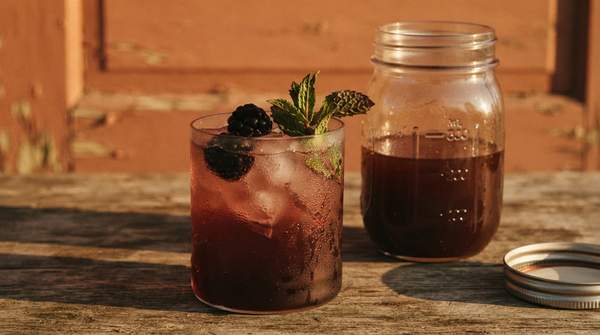
To serve, remember the shrub's whole history in one glass: a splash of syrup topped with still or sparkling water makes the refreshing drink colonial households knew, while a measure added to spirits builds the cocktail ingredient Prohibition-era drinkers and modern bartenders discovered.
Embrace the Shrub Revival: Start Your Own Infusion
Readers can confidently begin making their own basic fruit shrub syrups at home, experimenting with various fruit and vinegar combinations. The method is forgiving and the history is on your side: infuse fruit in vinegar, strain, sweeten, and adjust. The measurable indicator of success is the creation of a balanced sweet-tart syrup that can be mixed into drinks—when a spoonful of your syrup transforms a glass of cold water or a cocktail into something bright, complex and refreshing, you have joined a tradition that stretches from 17th-century English preserves to the modern craft bar.