The secret to a cohesive dinner party menu is to plan backward from the produce: let the farmer's market define your ingredient list before you open a single cookbook, then assign those ingredients to courses and balance the meal across flavor, texture, and cooking method. Hosts who learn to read the market and build a menu from what's actually there can, as one seasonal entertaining guide puts it, host a different dinner every two weeks without starting from scratch. The approach rewards simplicity over complexity — a ripe tomato with olive oil, salt, and basil isn't a shortcut, but the best version of itself.
The Ingredient-First Approach to Seasonal Menu Planning
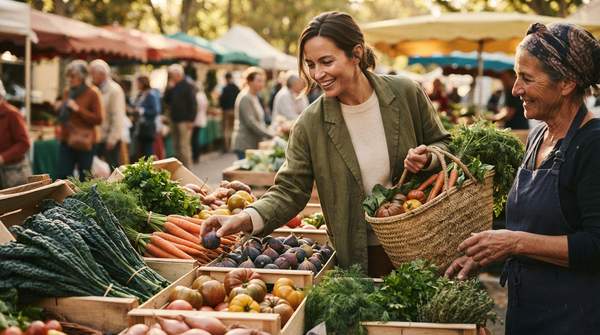
Most hosts plan a dinner party by choosing recipes first and shopping for them second. The ingredient-first approach reverses that order. Peak-season produce — in a summer market, stone fruit, cherry tomatoes, sweet corn, zucchini, and green beans — defines the ingredient list before any recipe is selected. The Gourmet Host's seasonal guide describes how a single market trip can shape every course of a meal, and notes that seasonal ingredients need less work because their flavor is already at its peak.
The payoff goes beyond taste. Writing for Coton Colors, Alicia Haskew observes that using fresh, in-season produce not only enhances flavor but adds "a sense of place and time to your menu," making a dinner feel more curated. Kim Gandhi, writing for the private chef platform Food Fire + Knives, frames the same practice as embracing the rhythm of nature: menus evolve with each season's unique produce, which supports local agriculture and sustainability alongside flavor. The market, in other words, is both a pantry and a plan.
Step-by-Step Framework: Building Your Seasonal Dinner Party Menu
The framework works in four steps, and it repeats in any season. First, identify anchor ingredients at the market — the produce at its absolute peak, the tomatoes that smell like tomatoes. Second, assign those ingredients to courses, building around a hero dish. Clodagh McKenna, the chef and cookbook author, recommends starting with the main course and constructing the rest of the menu around it: if the main is rich, creamy, or heavy, the starter and dessert should be very light; a spicy main calls for a palate-cleansing dessert such as lemon posset or sorbet; a meat or fish main pairs well with a fresh salad or light chilled soup so palates arrive ready for the feast.
Third, balance flavors and textures across the whole meal. Haskew's guidance is to keep a mix — creamy, crunchy, savory, and sweet — so the palate stays engaged all the way to dessert. Fourth, diversify cooking methods so no single course repeats another's technique and the kitchen doesn't bottleneck. A summer menu, for instance, leans on grilling and cold preparations rather than oven timing and heavy sauces, while a winter menu might do the opposite. The same constraint logic applies in every season: each ingredient gets a course, each course gets a distinct texture and flavor role, and each dish gets a different path to the table.
Your Seasonal Menu Planning Decision Framework
Use this matrix to transform any market haul into a balanced, multi-course plan. Work through the stages in order — each one applies a constraint that narrows the possibilities toward a cohesive menu.
| Planning Stage | Key Principle | Finding | Benefit/Outcome |
|---|---|---|---|
| Ingredient Selection | Starting Point | Begin menu planning by identifying peak seasonal produce at the farmer's market; the haul defines the ingredient list before recipe selection. | Peak flavor and a menu grounded in what's genuinely fresh. |
| Course Assignment | Meal Flow | Assign selected ingredients to courses, building around a hero main dish; keep starters and desserts light when the main is rich. | A harmonious progression from starter to dessert. |
| Flavor and Texture Balance | Palate Engagement | Mix creamy, crunchy, savory, and sweet elements so the palate stays engaged through dessert. | Each dish contributes uniquely; no course repeats another. |
| Cooking Method Variety | Kitchen Logistics | Spread dishes across room-temperature, oven, and stovetop methods, with some assembled in advance. | No bottleneck at one appliance; the host isn't in a full sweat at arrival. |
| Hosting Logistics | Stress Reduction | Choose make-ahead dishes and recipes that hold well at room temperature; match food format to how guests will eat. | A thoughtful menu pulled together without last-minute pressure. |
To see the operation in motion, imagine a late-summer haul of tomatoes, corn, zucchini, and stone fruit. The tomatoes, at their peak, become a no-cook starter dressed with olive oil and basil — minimal intervention, as the seasonal principle prescribes. Corn and zucchini anchor the hero main, perhaps grilled, since a summer menu rewards outdoor cooking over oven timing. Stone fruit closes the meal as a light, fresh dessert that cleanses rather than weighs down. Each ingredient has a course, each course a distinct texture, and each dish a different method — the exact sequence of constraints the matrix walks through.
Beyond Flavor: Practical Benefits of Seasonal Eating
Flavor is the headline, but three practical benefits make the seasonal approach worth adopting on their own. The first is cost. Chrystina Cappello, a party-planning writer, recommends choosing seasonal items specifically "to keep the prices down and the freshness up." Mary Cate Long, writing for The Good Trade, reports the same from experience: honoring the summer season reduced the cost of her dinner party, and filling the cart with fruits and vegetables rather than meat made the overall bill much less.
The second benefit is effort. Because seasonal ingredients are at their peak, they require less complex preparation — the ripe tomato principle again. A dish that needs salt, oil, and good produce is a dish that can't go wrong in execution, which matters enormously when you're cooking for a crowd. The third is agricultural: buying at the market supports local producers, a benefit both Long and Gandhi name explicitly. Reduced cost, reduced complexity, and a stronger local food economy — all from the same shopping trip.
Seamless Hosting: Logistics for a Stress-Free Dinner Party
A balanced menu still fails if every dish finishes at 7:58. The Gourmet Host's guide frames the real challenge as sequencing: choosing dishes that hold well at room temperature and require most of their work the day before, so hosts can have good conversation without disappearing into a hot kitchen. Ina Garten's widely cited four-dish rule, as reported by Food Republic, formalizes this: something served at room temperature, some things in the oven, some on the stove, and a few dishes assembled in advance — "so I'm not in a full sweat when my friends arrive!"
Guest considerations complete the picture. Haskew reminds thoughtful hosts to know their audience and accommodate dietary restrictions and favorite dishes, even celebrating a guest of honor through the menu. Cappello adds a logistical test: match the food to the setting. If guests will mingle, serve bite-sized items that can be eaten while holding a drink; if plates sit on laps, avoid anything that slides around. A seasonal menu doesn't change these rules — it simply makes them easier to satisfy, because simple, fresh dishes tend to hold and travel well.
Plan Your Next Dinner Party with Confidence
Adopt an ingredient-first, seasonal approach to menu planning for your next dinner party to create a cohesive, flavorful, and less stressful entertaining experience. The framework is season-proof: read the market, anchor the meal in a hero dish, assign the rest to courses, vary the textures and the cooking methods, and build in make-ahead and room-temperature dishes. The measurable indicator of success is confidence in outlining a multi-course menu based on seasonal ingredients and market availability, incorporating balanced flavors, textures, and make-ahead options — a plan you can write down before you shop, and enjoy the party you've built.
Sources
- Summer Dinner Party Menu: The Seasonal Guide — The Gourmet Host
- Create a Beautiful and Balanced Menu for Your Next Dinner Party — Coton Colors by Laura Johnson
- How To Balance A Dinner Party Menu — The Clodagh Store
- Party Planning 101: How to Plan a Party Menu — Chrystina Noel
- How To Host A Seasonally Inspired Dinner Party On A Budget — The Good Trade
- Ina Garten's 4 Dish Rule For Better Dinner Parties - Food Republic