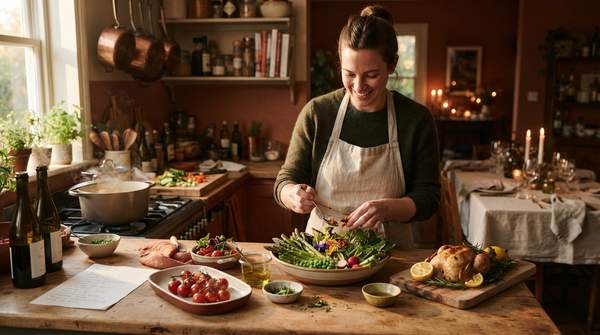
The most memorable dinner party menus don't begin with a recipe—they begin with the season. Instead of picking a main course and working outward, a season-first approach starts by identifying what is at its peak right now, then builds every course around that anchor. The result, according to menu-planning guidance from Fine Food Specialist and The Gourmet Host, is a meal that feels cohesive, fresh, and far less stressful to execute. This guide turns that advice into a sequential process any home cook can follow.
Start with the Season: Choosing Your Anchor Ingredient
Seasonality is, as Gosia Migdalek writes for Fine Food Specialist, "one of the easiest ways to make your dinner party menu feel thoughtful and fresh." Before you browse recipes, list what is at its peak: asparagus and fresh herbs in spring, tomatoes and berries in summer, mushrooms and squash in autumn, or slow-cooked meats and rich sauces in winter. Seasonal ingredients naturally taste their best and require less fuss, as Alicia Haskew notes on the Coton Colors blog, which makes them ideal for home hosts without professional equipment.
From that list, choose one anchor ingredient or flavor theme. Restaurantware's guide to seasonal menu development suggests identifying peak produce and spices first, then experimenting with pairings before committing. An autumn anchor of wild mushrooms, for example, can carry a menu from a delicate starter to a rich main without ever feeling repetitive.
Building Your Menu: Structuring Courses for Flow
Once the anchor is set, structure the courses so the meal progresses rather than plateaus. The Gourmet Host advises that the best party menus consider flavor progression and visual presentation, with each course building anticipation for the next. A practical pattern: begin with lighter, brighter dishes and move toward richer ones, ending with something that satisfies without overwhelming—Fine Food Specialist points to a berry-topped pavlova as a dessert that is "light enough to enjoy after a multi-course meal."
Every dish should complement the anchor rather than compete with it. If mushrooms are your autumn anchor, a mushroom risotto main might pair with a crisp green starter and a clean citrus or chocolate finish. A summer menu, Migdalek suggests, could move from ceviche to tomato salad to snapper to pavlova—a sequence that stays light and lets each peak ingredient shine in turn.
The Art of Balance: Flavor, Texture, and Color
Balancing a menu means working across three sensory dimensions at once. On flavor, Restaurantware identifies complementary pairing—matching similar profiles, like creamy avocado with nutty sesame—and contrasting pairing, combining opposites like tart cranberries with rich chocolate. Its autumn example pairs the earthiness of roasted root vegetables with the sweetness of a maple glaze, a combination that highlights the season's bounty without masking it.
Texture keeps a multi-course meal interesting. Fine Food Specialist describes how a crisp meringue exterior gives way to a soft, marshmallow-like center—a contrast principle that applies well beyond dessert. Aim for at least one crisp or crunchy element per course to offset soft or creamy dishes. Color, meanwhile, is the most visible balance of all: an all-brown autumn plate of squash, mushrooms, and game needs the green of herbs or the red of cranberries to feel intentional rather than monotonous.
Beyond the Plate: Varying Cooking Methods and Planning Prep
The final balance happens in the kitchen, not on the plate. The Gourmet Host warns against choosing three dishes that all need the oven at different temperatures, and recommends spreading a menu across stovetop, oven, and no-cook preparations so everything comes together without a bottleneck. For a home cook with one oven and four burners, this is the difference between plating courses in sequence and serving them all cold.
Then build a timeline. Fine Food Specialist calls the cooking timeline "one of the most useful steps in the entire process": break tasks down by day, identify what can be made ahead, and reserve party-day effort for finishing touches. The goal, as The Gourmet Host puts it, is a meal that feels generous and curated without overwhelming the person preparing it—so the host spends the evening with guests, not alone at the stove.
Seasonal Menu Planning Decision Framework
The table below condenses the entire process into a sequence of decisions. Work through the stages in order; each answer constrains and simplifies the next.
| Planning Stage | Key Question | Considerations | Example |
|---|---|---|---|
| 1. Seasonal Anchor | What is at its peak right now? | Freshness and flavor first; seasonal produce needs less fuss and creates cohesion. | Autumn wild mushrooms as the menu's central flavor. |
| 2. Course Structure | How should the meal progress? | Move from lighter to richer dishes; each course builds anticipation for the next. | Crisp salad, then mushroom risotto, then a light fruit dessert. |
| 3. Balancing the Elements | Do flavor, texture, and color contrast enough? | Pair complementary or contrasting flavors; mix crisp and soft textures; vary color on the plate. | Earthy roasted roots with sweet maple glaze; tart berries against a rich dessert. |
| 4. Cooking Methods and Prep | Can I actually execute this? | Spread dishes across oven, stovetop, and no-cook; make ahead where possible; avoid constant-attention dishes. | Make-ahead dessert, stovetop main, no-cook starter, day-by-day task list. |
Notice how the stages feed one another: the autumn mushroom anchor suggests a rich main, which in turn demands a lighter starter and a fresh, colorful finish, which then shapes which cooking methods you need on the night. That is the framework doing its work—turning one good ingredient into a complete, balanced, practical menu.
Seasonal Ingredient Inspiration
To begin Stage 1, use this quick reference of ingredients at their seasonal peak, drawn from Fine Food Specialist and Coton Colors.
| Season | Peak Ingredients | Menu Direction |
|---|---|---|
| Spring | Asparagus, young vegetables, fresh herbs | Light, green, delicate flavors |
| Summer | Tomatoes, berries, stone fruit, courgettes, lighter seafood | Bright, fresh, vibrant colors; minimal cooking |
| Autumn | Mushrooms, squash, root vegetables, game | Earthy, roasted, richer dishes |
| Winter | Truffles, slow-cooked meats, rich sauces, gratins, citrus | Comforting and indulgent, with citrus to brighten |
Within a season, apply the pairing principles from Stage 3: complementary pairings for harmony, contrasting pairings for balance, and regional pairings—like tomatoes with basil—for combinations that already belong together.
Your Next Steps to a Memorable Seasonal Dinner Party
Apply the four-stage framework to your next dinner party: choose a seasonal anchor from the table above, structure your courses from light to rich, balance flavor, texture, and color across the menu, and then vary your cooking methods and build a day-by-day prep timeline. The measure of success is a cohesive, balanced multi-course menu outline that leverages peak seasonal ingredients and allows for enjoyable host participation. If your written menu passes that test—seasonal, sequential, balanced, and executable—you are ready to shop, cook, and actually attend your own party.
Sources
- How to Plan a Dinner Party Menu: A Step-by-Step Guide — Fine Food Specialist
- 3-Course Dinner Party Menu: Plan a Meal Guests Remember — The Gourmet Host
- Create a Beautiful and Balanced Menu for Your Next Dinner Party — Coton Colors by Laura Johnson
- Flavor Pairing Strategies for Seasonal Menus — Restaurantware