Heritage grains differ from modern commodity grains in how they are bred, how they are grown, and what they taste like—and those differences add up to real environmental and community value. Heritage varieties are typically open-source seeds grown with regenerative practices, prized for complex flavor rather than uniform yield. Modern commodity grains, by contrast, are bred for high yield and shelf life, often on industrial monocultures. Understanding that contrast is the first step toward seeing why bakers, farmers, and food activists across the United States are rebuilding local grain economies around these older wheats.
Understanding Heritage Grains: A Return to Roots
Heritage grains are varieties that predate modern scientific plant breeding, which began in the late 19th and early 20th centuries. The term "ancient grains" typically refers to primitive cereals like einkorn, emmer, and spelt—species that have remained largely unchanged for centuries, according to Palouse Heritage, a Washington-state grower of heritage varieties. Heritage grains, more broadly, are older varieties preserved for their distinct character rather than their output.
What makes these grains rare is precisely what makes them valuable. As the writers at Flour is Flavour, a Toronto grain project, explain, these are grains grown 150 years ago and more, so little seed survives. A farmer may spend years growing out a handful of seed into a viable crop. Mad Agriculture's Grain Revival Guide describes the movement the same way: it always starts with the seed, as farmers save and swap varieties that have adapted to local climates and soils over time.
Heritage vs. Modern Grains: A Comparative Look
The clearest way to understand the heritage grain revival is to set the two systems side by side. The table below contrasts typical characteristics across four dimensions—seed genetics, farming practices, environmental outcomes, and culinary qualities—drawing on grower accounts, bakery reporting, and agricultural guides.
Heritage Grains vs. Modern Commodity Grains: A Comparative Overview
| Dimension | Heritage Grains | Modern Commodity Grains |
|---|---|---|
| Seed Source & Genetics | Open-source seeds, openly available to farmers without corporate patent restrictions; some varieties identified as endangered by Slow Food USA's Ark of Taste | Bred for high yield and shelf life, often under proprietary or patented genetics that limit seed re-use |
| Farming Practices | Typically organic and regenerative methods—cover crops to fertilize soil naturally, no genetic modification, no glyphosate | Industrial techniques geared toward efficiency and yield, including synthetic inputs and herbicides such as glyphosate |
| Environmental Impact | Supports biodiversity preservation and environmental sustainability; varieties adapted to local conditions | Dominance of a few commodity wheat varieties can lead to monoculture and reduced agricultural diversity |
| Culinary Qualities | Distinct, complex flavors and unique textures; many people report easier digestion | Uniform, consistent for industrial processing; flavor is often secondary to yield and shelf life |
The trade-off is visible in every row: heritage systems accept lower availability and extra labor in exchange for genetic diversity, ecological care, and flavor. Modern systems optimize for volume and consistency. Neither row describes every farm, but the pattern holds across the sources describing each system.
Environmental Advantages: Cultivating a Healthier Planet
The environmental case for heritage grains rests on both the seed and the farming. Palouse Heritage describes using what it calls Old World sustainable and regenerative practices, including cover crops that naturally fertilize the soil, and operating without genetic modification or glyphosate in its field operations. The farm's varieties are listed in Slow Food USA's Ark of Taste catalog, which exists to promote preservation of biodiversity and culinary distinction.
That biodiversity argument matters beyond any single farm. Macrina Bakery, reporting on grain gatherings in Washington's Skagit Valley, notes that participants aim to break the dominance of commodity wheat—whose focus on a few high-yield varieties can limit agricultural diversity. Caney Fork Farms, writing on the Southeastern grain revival, adds that cover crop grains such as cereal rye and winter wheat can transition into cash crops, delivering soil health benefits while generating income. The environmental advantage, in other words, is not just avoiding harm but actively rebuilding soil and genetic diversity.
Culinary Excellence: Flavor, Texture, and Digestibility
Flavor is the movement's number one selling point, as Macrina Bakery's reporting from grain gatherings makes plain, with nutrition and environmental sustainability close behind. Heritage wheats carry the taste of place—regionally adapted varieties with character that industrial breeding, focused on yield and shelf life, has largely ignored.
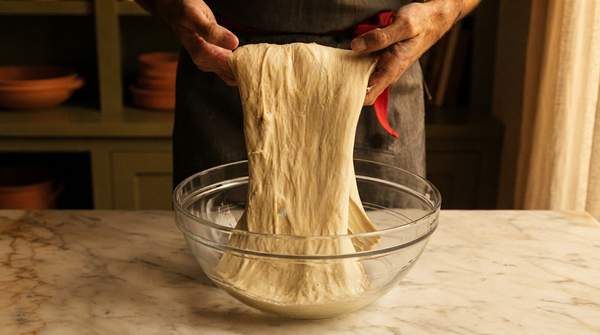
Digestibility is a more personal matter, and the evidence here is experiential rather than clinical. Sunrise Flour Mill reports that many people who feel discomfort or bloating after eating standard wheat products find heritage wheat easier to digest, and that heritage wheat contains a more diverse range of natural compounds, fibers, and micronutrients. The mill is careful to note that heritage grains still contain gluten and are not suitable for people with celiac disease. Bakers also face a learning curve: Flour is Flavour cautions that heritage grains are very different to mill and bake with compared to modern grains with their strong gluten and harder wheat berries.
Building Resilient Local Food Systems
The larger promise of heritage grains is economic and communal. Caney Fork Farms describes how farmers who grow their own grain avoid purchasing expensive livestock feed or flour for value-added products, keeping more dollars on the farm while reducing transportation costs and supply chain dependencies. For farms raising livestock, homegrown grains cut feed costs and improve animal nutrition.
What sets today's movement apart, Caney Fork Farms argues, is its focus on building complete food systems: successful grain economies need not just farmers but millers, bakers, brewers, and other processors who can transform raw grain into products people want. The Northeast offers a working model—Chef Dan Barber's commitment at Blue Hill at Stone Barns to sourcing grains from the surrounding Hudson Valley has created market demand that supports local farmers while showing diners the flavor of freshly milled, regionally adapted grain. Palouse Heritage frames the seed itself as a food-security asset: open-source seeds, free from corporate patents, encourage food sovereignty and self-sufficiency for local communities.
Supporting Local Grain Economies: A Path to Resilient Food Systems
Choose heritage grains to support biodiversity, regenerative farming, and local food security. Every purchase of heritage flour or grain sends a signal down a shortening supply chain—to the farmer saving seed, the miller stone-grinding it fresh, and the baker learning to work with its character. The trade-offs are real: heritage grains can be harder to find, harder to bake with, and slower to reach scale. But the payoff is a food system where flavor, soil health, and farmer livelihood reinforce one another rather than compete.
The measurable indicator of this movement's success is increased availability of heritage grain products in local markets and bakeries, and growth in community-supported agriculture programs featuring heritage grains. Watch those shelves and CSA listings: when heritage grain flour appears where commodity flour once sat alone, the revival is working.