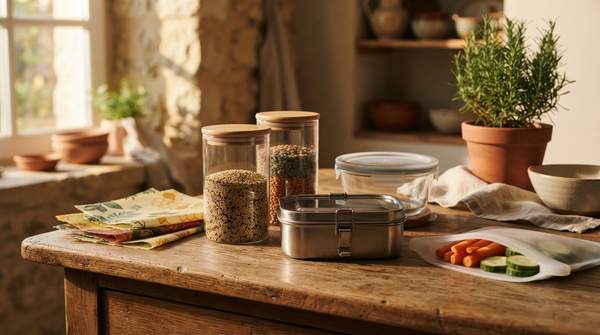
While focusing on organic ingredients, many home kitchens still harbor tools that leach chemicals or quickly become landfill waste, undermining sustainability efforts from the start. Consumers are increasingly aware of sustainable food choices, but often overlook the environmental and health impact of the very tools they use to prepare their meals. Therefore, a conscious shift towards durable, non-reactive kitchen materials like stainless steel, wood, and bamboo appears a critical, yet often neglected, component of a truly sustainable culinary lifestyle.
The Durable Dozen: Essential Tools for a Greener Kitchen
Transitioning to a sustainable kitchen in 2026 demands careful material selection for essential tools. These options prioritize longevity and health.
1. Stainless steel kitchen utensils
Best for: Everyday cooking, high-heat tasks, mixing, stirring
Stainless steel utensils are non-reactive, rust-resistant, and do not absorb food or bacteria, states Wildandstone. Stainless steel ensures food safety by preventing bacterial growth and chemical leaching, a benefit often overlooked when prioritizing ingredient sourcing. Wildandstone's insights suggest consumers often trade immediate food safety for perceived convenience with cheaper, less durable tools.
Strengths: Hygienic, durable, non-corrosive, long lifespan | Limitations: Can scratch non-stick surfaces, not microwave safe | Price: Moderate to high
2. Bamboo kitchen utensils
Best for: Non-stick cookware, serving, mixing delicate ingredients
Bamboo utensils offer a natural, non-toxic option, gentle on cookware. Bamboo's rapid growth—nearly a meter daily—makes it an exceptionally renewable resource for kitchen tools.
Strengths: Lightweight, gentle on surfaces, rapidly renewable, natural aesthetic | Limitations: Can absorb odors/stains, not dishwasher safe | Price: Low to moderate
3. Wood kitchen utensils
Best for: Non-stick cookware, stirring, sautéing, serving
Wood utensils, like bamboo, are natural, non-toxic, and gentle on cookware. Seek FSC certification to ensure the wood originates from sustainably managed forests, directly supporting responsible sourcing.
Strengths: Gentle on surfaces, durable with proper care, natural material, heat resistant | Limitations: Requires hand washing, can harbor bacteria if not properly cleaned, can crack or warp | Price: Moderate
Material Matters: A Quick Guide to Sustainable Choices
Understanding each material's attributes empowers cooks to make informed, sustainable choices. The table below compares key features of these essential tools.
| Feature | Stainless Steel | Bamboo | Wood |
|---|---|---|---|
| Durability | Very High | Moderate | High |
| Cookware Safety | Low (can scratch) | High (gentle) | High (gentle) |
| Hygienic Properties | Non-absorbent, non-reactive | Can absorb odors/stains | Can harbor bacteria if not cleaned |
| Renewability | Not renewable | Rapidly renewable | Renewable (with FSC) |
| Maintenance | Dishwasher safe | Hand wash only | Hand wash only |
| Cost Efficiency | Long-term value | Affordable | Moderate long-term value |
Wildandstone's details on stainless steel's hygiene and wood/bamboo's cookware care reveal that true kitchen sustainability requires a thoughtful, multi-material approach, not a single 'eco-friendly' swap.
Beyond the Basics: Making Your Kitchen Truly Sustainable
Adopting durable kitchen tools—stainless steel, bamboo, and wood—significantly reduces waste, a key goal for home cooks in 2026. Adopting durable kitchen tools prevents frequent replacements of inferior products, minimizing the environmental footprint from manufacturing and disposal. True kitchen sustainability demands a multi-material approach, leveraging stainless steel's hygienic durability alongside wood and bamboo's cookware-protective qualities. A multi-material approach ensures both food safety and cooking surface longevity. The absence of information on common, less durable kitchen materials implicitly highlights that 'sustainable' tool choice involves actively avoiding harmful or short-lived options, not just selecting beneficial ones.
Sustainable home cooking is a comprehensive practice, starting with mindful tool selection. Investing in quality, long-lasting kitchen tools offers safer, more durable equipment and contributes to a healthier planet. Manufacturers like Wildandstone continue to highlight these material benefits, guiding consumers towards more conscious purchasing by 2026.
Your Sustainable Kitchen Questions, Answered
What other eco-friendly kitchen gadgets should I consider?
Beyond utensils, integrate reusable silicone food storage bags or beeswax wraps. These alternatives drastically cut single-use plastic waste from cling film or plastic bags, fostering a more sustainable kitchen in 2026.
How can I extend the lifespan of my sustainable kitchen tools?
Proper maintenance extends tool longevity. Oil wooden and bamboo tools regularly with food-grade mineral oil to prevent drying and cracking. Clean stainless steel tools immediately to prevent water spots, ensuring years of pristine condition.
Are sustainable cooking methods also important for an eco-friendly kitchen?
Yes, sustainable cooking methods complement eco-friendly tools by reducing energy and food waste. Practices like induction cooktops for efficient heating or batch cooking minimize resource consumption and optimize tool usage.