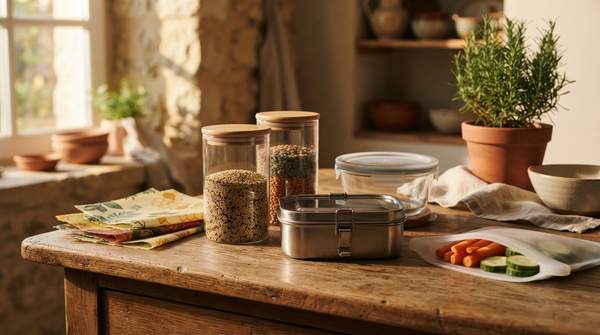
Selecting the right eco-friendly food storage containers can significantly impact how you preserve food, reduce waste, and maintain a sustainable kitchen. With options ranging from glass to stainless steel, silicone, and beeswax wraps, each material offers distinct properties regarding durability, temperature resistance, and suitability for various food types and storage durations. Understanding these differences will help you make informed choices for your specific needs.
Glass Containers: Versatility and Durability
Glass containers are a highly versatile and durable option for food storage. They are non-reactive, meaning they won't leach chemicals into your food, making them safe for a wide variety of items, including fats, liquids, cooked proteins, vegetables, fruits, and leftovers, according to The Paleo Diet. Glass is also resistant to odors and stains, maintaining its clarity and cleanliness over time. You will find that glass containers are compatible with microwave, dishwasher, and freezer use, and they can withstand high temperatures, making them suitable for reheating and baking.
While glass is durable, it is also heavy and can crack or shatter if dropped or exposed to extreme thermal shock, as noted by Let's Go Green. When choosing glass, opt for lead- and cadmium-free varieties for food safety. Mason jars, for instance, offer a budget-friendly and versatile option for storing dry goods in the pantry, leftovers in the fridge, or freezer foods, provided you leave proper headspace for expansion, Let's Go Green explains. Cube Packaging highlights glass as ideal for pantry storage and leftovers, noting its high durability and recyclability.
Stainless Steel Containers: Robust and Portable
Stainless steel containers are celebrated for their robustness and portability, making them an excellent choice for lunches and travel, according to Let's Go Green. This material is durable and won't shatter, offering a long lifespan—Cube Packaging suggests they can last over 10 years with minimal maintenance. The Paleo Diet recommends stainless steel for raw proteins, vegetables, nuts, seeds, and portable meals due to its durability and non-reactive nature.
Stainless steel containers are generally dishwasher and freezer compatible and offer high temperature resistance, but they are not suitable for microwave use, as Let's Go Green points out. While stainless steel is considered a safe food storage material, Let's Go Green also mentions that it contains chromium and nickel. Some sources suggest that these elements could potentially leach into food, particularly with acidic foods or at high temperatures, though this concern is more commonly associated with cookware rather than storage containers. Stainless steel is also a recyclable material, contributing to its eco-friendly profile.
Silicone Containers: Flexible and Temperature-Resistant
Silicone containers offer a unique combination of flexibility and temperature resistance, making them a practical choice for various storage needs. The Paleo Diet describes silicone as pliable, durable, and non-toxic, making it handy for snacks and small meals on the go. Let's Go Green further notes that silicone is resistant to both heat and cold, and it can provide an airtight seal, which is crucial for preserving food freshness. This flexibility allows silicone containers to be easily collapsed for storage when not in use.
You will find that high-quality silicone is compatible with microwave, dishwasher, and freezer use, making it a versatile option for reheating, cleaning, and long-term preservation. However, it is important to ensure that silicone products meet safety requirements from organizations like the FDA, EU, or LFGB, as advised by Let's Go Green. While silicone is highly functional, it can sometimes stain or absorb odors, and its end-of-life typically involves disposal in a landfill, as recycling options are not widely available.
Beeswax Wraps: Natural and Compostable
Beeswax wraps provide a natural and compostable alternative to plastic wrap, ideal for short-term food storage. These wraps are typically made by infusing cotton fabric with beeswax, sometimes combined with other ingredients like jojoba oil or tree resin, as described by The Paleo Diet. The natural warmth from your hands allows you to mold the wrap into folded packets or use it to cover bowls and cut produce, creating a breathable seal.
The Paleo Diet suggests beeswax wraps are best for short-term storage of fruits, vegetables, and baked goods. However, it is important to avoid using them with hot foods and to wash them only in cold water to preserve the wax. Let's Go Green notes that while beeswax wraps are reusable and moldable, they may not always be airtight and require eventual replacement. A significant environmental benefit of beeswax wraps is their compostability at the end of their useful life, offering a zero-waste solution.
Choosing Your Eco-Friendly Container: A Decision Framework
When selecting eco-friendly food storage, consider your specific needs for food type, storage duration, and temperature requirements. Here's a framework to guide your decision:
-
For Versatility and High-Temperature Use: Glass
Choose glass for nearly all food types, including fats, liquids, cooked proteins, and leftovers. Its non-reactive nature ensures food safety, and its compatibility with microwaves, ovens, dishwashers, and freezers makes it incredibly versatile. Glass is also excellent for long-term pantry storage and for foods that might stain or absorb odors in other materials. Remember its weight and fragility when considering portability.
-
For Durability and Portability: Stainless Steel
Opt for stainless steel when you need robust, shatter-proof containers, especially for packed lunches, travel, or storing raw proteins, nuts, and seeds. Its high durability and temperature resistance (excluding microwave use) make it suitable for freezer storage and general long-term use. Be mindful of potential leaching with highly acidic foods, particularly at high temperatures.
-
For Flexibility and Airtight Seals: Silicone
Silicone is ideal for flexible storage solutions, such as reusable bags or containers that need to collapse for space-saving. Its ability to provide an airtight seal and resistance to both heat and cold makes it suitable for a range of food items, including freezer storage. Ensure the silicone meets recognized safety standards for food contact.
-
For Short-Term, Breathable Storage: Beeswax Wraps
Utilize beeswax wraps as a natural, compostable alternative to plastic wrap for short-term storage of fruits, vegetables, and baked goods. They are perfect for covering bowls or wrapping individual items that benefit from a breathable environment. Avoid using them with hot foods or liquids, and clean them with cold water to maintain their integrity.
By aligning the material properties, sealing mechanisms, and temperature resistance of these eco-friendly options with your specific food storage requirements, you can make choices that are both effective for food preservation and beneficial for the environment.