The short answer for most home cooks: start with a wide-mouth Mason jar, graduate to a glass airlock jar if you ferment often, and invest in a water-seal ceramic crock only when you are making large batches of sauerkraut or kimchi. Wooden barrels sit at the specialist end of the spectrum, demanding real maintenance commitment. The right choice comes down to three questions: how much are you fermenting, how tightly do you want to control oxygen, and how much upkeep are you willing to accept? This guide compares all four vessel types on exactly those criteria for lacto-fermented vegetables and fruits. It does not cover beer or wine brewing equipment, continuous-brew kombucha setups, or specific recipes.
Understanding the Importance of an Anaerobic Environment
Successful lacto-fermentation depends on keeping your food submerged in brine and limiting its exposure to oxygen. Wardee Harmon, writing for Traditional Cooking School, puts the principle plainly: whatever vessel you choose, "keep in mind the idea of the brine and keeping food submerged." Oxygen at the surface is what invites the yeasts and molds that spoil a ferment, so every good vessel design is, at heart, an oxygen-control strategy.
Vessels achieve this in different ways. In a basic jar, a weight does the work: Carolyn Thomas of Homesteading Family explains that a glass fermentation weight "sits on top of your fermenting foods and keeps that food underneath the fermentation liquid." Jars sealed without an airlock may need manual attention to gas buildup, while water-seal crocks and airlock jars let carbon dioxide escape without letting fresh oxygen back in. Understanding which mechanism a vessel uses tells you how much daily attention your ferment will demand, and how forgiving it will be when life gets busy.
Mason Jars: The Accessible Starter
The plain Mason jar is the most accessible entry point into fermentation, and most kitchens already own several. Harmon recommends them in a range of sizes, and Thomas notes that half-gallon wide-mouth jars are her preference, because a narrow-mouth opening makes it difficult to get vegetables in and out. For small batches of pickles, sliced vegetables, or fruit ferments, the Mason jar is hard to beat on cost and availability.
The trade-off is that a bare jar does nothing to manage oxygen on its own. You will want a glass fermentation weight to hold the food under the brine, and you may need to release trapped gas manually unless you fit the jar with a specialized airlock lid. Harmon also cautions on material: avoid plastic, because the acids in fermented foods may leach plastic into your food, and favor glass and lead-free ceramic instead. While readily available, Mason jars require those additional measures for optimal anaerobic conditions.
Ceramic Crocks: Traditional and Large-Batch Friendly
For big autumn batches of sauerkraut or kimchi, the stoneware crock is the traditional workhorse. German and Polish-style crocks are designed specifically for lactic acid fermented vegetables, with capacities typically ranging from 5 to 30 liters. Their stoneware walls are opaque, shielding the ferment from light, and the glazes are lead-free and cadmium-free on the handcrafted models. One manufacturer notes that a liquid ceramic casting process makes modern German pots lighter and more durable than traditional heavier crocks.
The standout feature is the water-seal airlock: a channel around the rim that you fill with water, so the lid lets fermentation gases bubble out while blocking oxygen from getting in. You do have to maintain water in that channel for the seal to work. The crock's weight, which makes it stable on your counter, also makes it difficult to move and requires careful handling. Expect a higher upfront cost than jars, though it is a relative comparison rather than a brand-specific buying guide.
Glass Airlock Jars: Visibility and Convenience
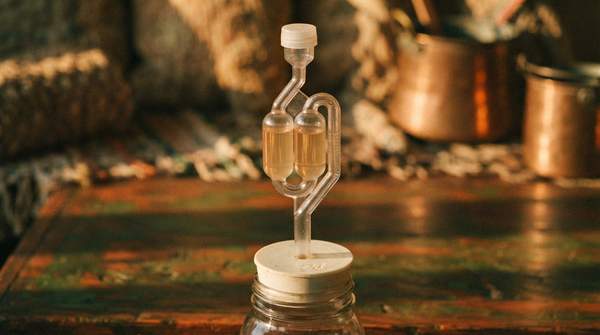
Thomas calls water-lock glass containers her new favorite method, and it is easy to see why they appeal to frequent fermenters. These jars pair glass construction with a built-in airlock, combining the oxygen control of a crock's water seal with the convenience and transparency of a jar. You can watch the ferment progress, check that the brine level is holding, and spot any surface issues without lifting a lid.
Because the airlock vents gas automatically, these jars remove the daily burping that plain sealed jars can require, which makes them more forgiving for small-batch vegetable and fruit ferments. The glass itself offers no protection from light, so keep them out of direct sun. Relative to a basic Mason jar, they carry a higher cost, but for a cook running several small ferments at once, the visibility and reduced attention are the payoff.
Wooden Barrels: For Specialized, Large-Scale Ferments
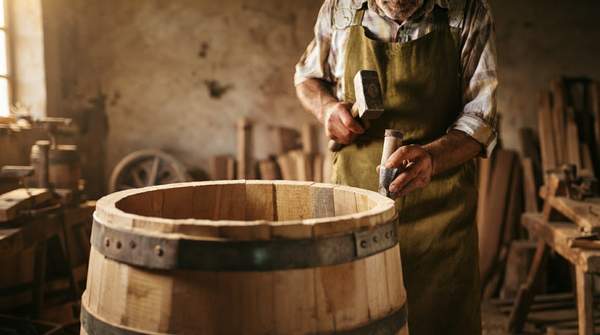
Wooden barrels are the most traditional option on this list, and the most demanding. Thomas is candid about the downsides: the barrels "have a tendency to shrink, which means you have to soak them in water to swell them." Any period of inactivity, or any mold finding its way inside, means you must sterilize the vessel, and sterilizing wood is genuinely difficult, generally requiring a chemical component such as a Campden tablet to guarantee a clean start.
That combination of regular soaking and hard-to-achieve sterility makes barrels best suited to experienced fermenters with a specific large-scale project in mind. For casual home use, they are less practical than every other option here, but for a committed traditionalist the payoff is a ferment with the character of old-world preserving. Just go in knowing the maintenance is part of the deal.
Fermentation Vessel Comparison Chart
The chart below evaluates all four vessel types against the same decision criteria: material, ideal ferment, oxygen control, ease of use, and relative cost. Reading across a row gives you each vessel's trade-off; reading down a column lets you compare the options where it matters most to your project.
| Vessel Type | Material | Best For (Ferment Type) | Oxygen Control Mechanism | Ease of Use & Maintenance | Relative Cost |
|---|---|---|---|---|---|
| Mason jar | Canning jar; glass is among the materials recommended for fermenting, and plastic is advised against | Small batches of various lacto-fermented vegetables and fruits | Weight keeps food submerged; can be fitted with airlock lids, otherwise gas may need manual release | Easy to use and clean; needs attention to submergence and gas buildup | Low; often uses existing kitchen supplies, plus optional lids or weights |
| Ceramic crock | Stoneware or ceramic, lead-free glaze; heavy and opaque | Large batches of lactic acid fermented vegetables such as sauerkraut and kimchi (typically 5–30 liters) | Water-seal airlock lets gases escape without letting oxygen in; channel water must be maintained | Very stable but heavy and hard to move; handle carefully | Higher upfront cost than jars |
| Glass airlock jar | Glass | Small-batch vegetable and fruit ferments; frequent fermenters | Built-in water-lock vents gas automatically and blocks oxygen | Convenient; transparent so you can monitor without opening; no UV protection, keep out of sun | Moderate; higher than a basic jar |
| Wooden barrel | Wood | Specialized, large-scale projects by experienced fermenters | Wood swells when soaked to seal; sterility is hard to achieve | High maintenance: regular soaking to prevent shrinking; sterilizing generally requires a chemical component such as a Campden tablet | Not for casual home use |
Choosing Your Ideal Fermentation Vessel
Match the vessel to your project, not to the trend. If you are fermenting for the first time or working in small batches, the wide-mouth Mason jar with a glass weight is the best starting point: low cost, already in your cupboard, and enough for pickles and sliced vegetables with a little daily attention. If you are committing to crocks of sauerkraut or kimchi that will feed a household through winter, the water-seal ceramic crock earns its price and its counter space through superior oxygen control at volume.
For the cook who always has two or three small ferments going, glass airlock jars offer the most convenience and the pleasure of watching the process through the walls, at a moderate cost and with no light protection. Wooden barrels belong on your list only if you have a specific large-scale project and the patience for regular soaking and chemical sterilization. In every case, remember Harmon's two material rules: keep food submerged under brine, and favor glass or lead-free ceramic over plastic.
Making Your Fermentation Vessel Decision
Choose a fermentation vessel that aligns with your batch size, desired level of oxygen control, and willingness to manage maintenance, considering Mason jars for beginners, ceramic crocks for large-batch traditional ferments, and glass airlock jars for convenience and visibility. The decision framework is straightforward: start with what you own, buy the crock when your batches outgrow jars, and reserve barrels for committed projects.
How do you know you chose well? The measurable indicator is a successful ferment with no surface mold, off-flavors, or signs of spoilage, indicating effective oxygen control and proper vessel selection. Check that your food stays beneath the brine, that your water seal or airlock holds, and that the ferment smells pleasantly sour rather than wrong. That clean result is your evidence that the vessel, not luck, carried your preserving project through.
Sources
- Best Fermentation Vessels (safe, affordable, easy) — Traditional Cooking School by GNOWFGLINS
- Best Fermenting Vessels (And What Else You Can Use!) — Homesteading Family
- Boleslawiec Fermenting Crock - 5 Liter with Glass Weights — Stone Creek Trading, LTD.