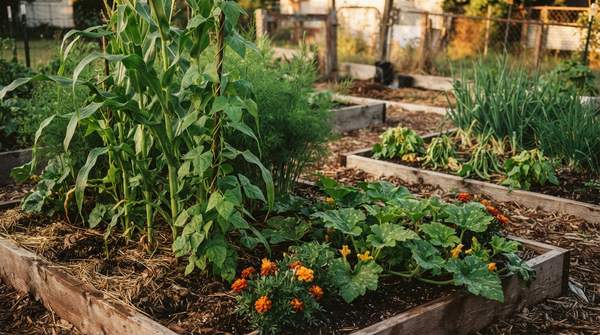
If you want a companion planting plan grounded in mechanism rather than folklore, three pairings stand out: corn with climbing beans and squash for physical support and soil fertility, summer savory beside beans to deter bean beetles, and marigolds alongside asparagus to repel soil-dwelling pests. Each works through a different route—structure, aroma, or root-zone chemistry—and understanding that difference lets you choose the right strategy for your own garden rather than copying a chart blindly.
Pairing for Physical Support and Soil Health
The classic example here is the Three Sisters garden of corn, beans and squash, which West Virginia University Extension describes as one of the most popular companion plantings. The mechanism is elegantly layered. Tall corn stalks act as a natural trellis, giving climbing beans a living support structure to clamber up—though the Old Farmer's Almanac notes this works for pole beans, not bush types. The corn can also improve sunlight access for the surrounding planting.
The beans contribute in return by fixing nitrogen, enriching the soil for the whole community, while the squash spreads across the ground as living mulch, suppressing weeds and shading the soil. WVU Extension frames the broader category the same way: companion planting can deter harmful insects, provide crop support, offer shade to smaller plants, suppress weeds, attract beneficial insects, and increase overall soil health. The Three Sisters bundles several of those functions into a single bed, which is why it has endured for centuries.
Pairing for Pest Deterrence and Trap Cropping
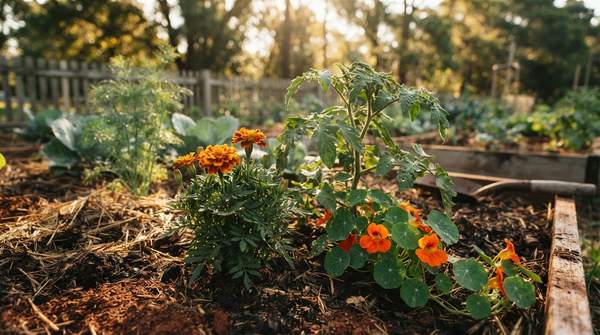
Not every pairing works through structure. Aromatic herbs deter pests chemically, and the evidence is specific about which herb guards which crop. A chart of combinations attributed to Todd Weinmann of the North Dakota State University Agriculture Extension, published in Burpee's companion planting guide, lists summer savory as a bean ally: it deters bean beetles and, by the same account, improves bean growth and flavor. Marigolds earn their place beside asparagus by deterring beetles and, per the same extension-sourced chart, nematodes and other soil-borne pests that would otherwise threaten asparagus roots.
The Almanac's vegetable chart adds a third pest-management route: the trap crop. Nasturtiums planted with beans act as a trap crop, drawing pests away from the bean plants. The chart also credits nasturtium and rosemary with deterring bean beetles generally. Trap cropping and deterrence are different strategies—one pulls pests toward a sacrificial plant, the other pushes them away—and knowing which you're deploying helps you place plants correctly.
Companion Planting Pairs for a Thriving Garden
The table below compares the three evidence-supported pairings by their primary mechanism, so you can match the strategy to your garden's specific problem: a vining crop needing support, a beetle problem needing a deterrent, or a root crop needing soil-pest protection.
| Plant Pairing | Primary Mechanism | Benefit to Gardener | How to Implement |
|---|---|---|---|
| Three Sisters (corn, beans, squash) | Physical support plus nutrient cycling and ground cover | Corn supports climbing beans; beans fix nitrogen; squash suppresses weeds | Plant corn first as the trellis; use pole-type climbing beans, not bush types; let squash sprawl between hills |
| Beans and summer savory | Aromatic pest deterrence | Summer savory deters bean beetles and, per extension-sourced guidance, improves growth and flavor | Interplant savory rows alongside beans through the growing season |
| Asparagus and marigolds | Soil-borne pest deterrence | Marigolds deter beetles, nematodes and other soil-dwelling pests that attack asparagus roots | Edge asparagus beds with marigolds so their root-zone compounds protect the asparagus crowns |
Read across the mechanism column and the categories emerge: physical structure, biochemical deterrence, and trap cropping. That framework—not the specific plants—is the transferable knowledge. A gardener facing aphids might reach for a companion that attracts beneficial insects instead; the Almanac's chart, for instance, credits lovage with drawing parasitoid wasps that prey on aphids and beetles.
Common Antagonistic Pairings to Avoid
Companion planting cuts both ways, and the most documented antagonism in the evidence involves beans again. The North Dakota State University extension chart is blunt: garlic, onion and shallot stunt the growth of beans. The mechanism behind such interference is usually traced to chemical compounds released by alliums that inhibit bean growth, but the practical instruction needs no chemistry lesson—keep the allium bed and the bean bed separated.
This is worth emphasizing because companion planting charts often list only allies, leaving gardeners to assume any two vegetables coexist peacefully. The same extension chart that recommends corn, cucumbers and radishes as bean companions flags the alliums as enemies, which is a reminder to check both columns before finalizing a layout.
Implementing Companion Planting in Your Home Garden
Putting these pairings to work is mostly a matter of layout logic. For the Three Sisters, timing matters: the corn needs a head start so its stalks are sturdy enough to carry the beans. For savory and beans, close interplanting puts the aromatic deterrent where the beetles arrive. For asparagus and marigolds, remember that asparagus is a perennial—the marigolds protect a bed that occupies the same ground for years, so the pairing is a long-term investment rather than a single-season trick.
Two honest caveats from the evidence itself. First, this is general horticultural guidance, not zone-specific instruction, so adapt planting dates to your region. Second, some companion planting lore—like the claim that certain pairings improve flavor—rests on time-tested garden wisdom rather than confirmed science, as Burpee's guide itself acknowledges. The extension-sourced chart does credit summer savory with improving bean growth and flavor, but treat that as accumulated experience, not a measured result.
Cultivating a Healthier Garden with Companion Planting
The decision is simple: implement at least one of the recommended companion planting pairs to observe direct benefits in pest management or plant vigor. Then make it measurable. Plant a portion of your beans beside summer savory and another portion without it, and monitor the health and pest incidence of the companion-planted vegetables compared to the non-companion-planted controls, noting reduced pest damage or improved growth. One season of that comparison will tell you more about your own garden than any chart can.
Sources
- Extension
- Companion Planting Guide — Burpee Seeds & Plants
- Companion Planting Chart for the Vegetable Garden — Almanac.com