Cedar and citrus create a very different impression from lavender and mint. One combination can suggest a crisp, woodsy room fragrance, while the other feels fresh and herbal. Developing either scent involves more than selecting appealing aromatic ingredients, particularly when the intended product is a liquid room spray.
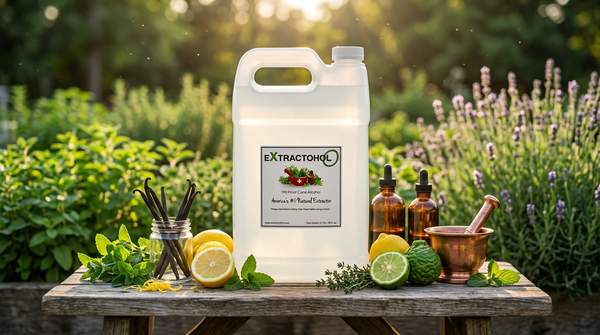
Extractohol provides high-proof food-grade ethyl alcohol for botanical extracts and aromatic preparations. Its 190-proof organic sugar cane alcohol offers a defined ethanol ingredient for fragrance formulations developed around that concentration, giving makers a specific starting product to evaluate as they bring botanical scent concepts into a usable formula.
Start With the Scent You Want to Create
Botanical room fragrance begins with an aromatic idea. A maker might want the bright character of citrus peel, the dry warmth associated with cedar, or the familiar herbal impression of lavender.
Those materials can enter a formulation through different ingredient types. Essential oils, botanical extracts, and fragrance materials are not necessarily interchangeable, even when they share a recognizable scent description.
A citrus extract prepared from plant material, for instance, may have a different composition and aromatic profile from a commercially produced citrus essential oil. Similarly, a woody fragrance material may behave differently in a liquid formulation from another ingredient associated with the same scent family.
Before selecting a solvent, the maker needs to identify which aromatic ingredients will actually be used. That makes the fragrance concept a useful starting point, but the ingredient specifications determine how the formula develops.
Ethanol Has a Particular Job in Fragrance Formulation
Ethanol is used in fragrance applications because it can dissolve many aromatic compounds and acts as a volatile carrier. Its evaporation behavior is relevant to products designed to disperse a scent, although the performance of a finished formulation depends on the complete ingredient mixture.
That is different from assuming that every botanical oil dissolves fully in any concentration of alcohol. Aromatic materials vary in solubility, and some formulations require additional ingredients or a different solvent system to achieve the intended result.
Extractohol's high-proof ethanol provides a possible alcohol component for methods and fragrance formulas developed around food-grade ethanol. The product offers a defined alcohol concentration, while the fragrance maker remains responsible for determining whether the full ingredient combination is appropriate.
In other words, selecting Extractohol answers the ethanol-sourcing part of the project. It does not replace formulation work involving aromatic compatibility, finished alcohol concentration, packaging, or safe product use.
Consider the Difference Between an Extract and a Finished Room Spray
A botanical extract and a room spray can share aromatic ingredients without being the same product. The extract is a preparation obtained from botanical material, while a finished spray needs a complete formula suited to its intended method of application.
For someone extracting aromatic compounds from herbs, ethanol may act primarily as an extraction solvent. For a room-fragrance maker, it may also be considered as part of the liquid carrier system in a suitable finished formulation.
These roles can overlap, but they call for different decisions. An alcohol extract that smells appealing in its container does not automatically have the dilution, stability, or application characteristics required of a finished room spray.
Extractohol's own material discusses botanical scents, perfumes, aromatherapy, and air-freshener applications. That makes the product range relevant to aromatic work, provided the maker treats the final fragrance formula as a separate design and safety requirement.
A Botanical Scent Needs More Than a Pleasant First Impression
A fresh aromatic idea can change when it is incorporated into a liquid. Different ingredients may interact with the solvent, alter the appearance of the mixture, or contribute to changes in the scent as the formula develops.
Consider a hypothetical room fragrance built around lavender and citrus. The maker needs to evaluate the actual aromatic materials being used, including whether they remain compatible with the selected solvent system and how the combined fragrance behaves over time.
A cedar-inspired fragrance raises similar questions. Its woody character may come from an essential oil, an extract, or another fragrance material, and those ingredients can have different solubility and handling requirements.
This is why the alcohol selection belongs within the formulation rather than being treated as a universal mixing ingredient. A known ethanol specification makes one part of the formula identifiable while the maker assesses how the remaining components perform together.
Where Extractohol-O Fits the Ingredient Selection
Extractohol-O 190 Proof Organic Sugar Cane Alcohol is food-grade ethanol with a nominal concentration of 95% alcohol and 5% water. Its contents include certified organic sugar cane alcohol, making the agricultural source an identifiable feature of the product.
For a botanical fragrance formula that specifies 190-proof ethanol, this provides a purchasing option with a stated proof and ingredient source. The organic sourcing may also appeal to makers who document the origins of individual ingredients used in their product range.
Those attributes should be kept in their proper scope. Certified organic contents do not establish that a finished room fragrance is certified organic, and food-grade status does not automatically establish suitability for every type of fragrance product.
The relevant question is whether the formula calls for that alcohol concentration and whether the complete preparation meets the requirements of its intended application. When those conditions fit, Extractohol-O offers an identifiable ingredient to include in the maker's purchasing plan.
Treat Flammability as Part of the Product Design
High-proof ethanol is highly flammable. In a room-fragrance context, the fire risk is especially relevant because an alcohol-containing liquid may be considered for dispersion into the air.
That makes it inappropriate to treat concentrated Extractohol as a ready-to-use room spray. A finished formulation requires appropriate assessment of its alcohol concentration, application method, packaging, labeling, and potential exposure to ignition sources.
The same caution applies to suggested household shortcuts. Pouring high-proof alcohol and essential oils into an ordinary spray bottle does not establish that the result is stable, compatible with its container, or safe for its intended use.
A fragrance maker working with ethanol should follow a validated formulation and applicable product-safety requirements. Extractohol supplies the alcohol ingredient, while the finished product must be assessed as a complete mixture.
From One Fragrance Idea to a Product Range
Home fragrance gives botanical makers room to develop distinct scent identities. A bright citrus-and-herb concept, a floral fragrance, and a resinous woody blend may each call for different aromatic ingredients even when the same type of carrier is under consideration.
That variety creates a reason to document the formulas separately. Ingredient identity, proportions, solvent specification, and packaging requirements all belong to the individual fragrance rather than to the product range as a whole.
Extractohol offers a practical purchasing choice within that work. Its 190-proof organic sugar cane alcohol is sold in one-gallon and five-gallon quantities, allowing the selected ingredient to remain consistent while the purchasing volume reflects a legitimate production requirement.
The 200-proof grain alcohol is another available formulation when a different established method calls for anhydrous ethanol. Neither product needs to be presented as universally preferable; the formula determines which starting specification makes sense.
Frequently Asked Questions
What does ethyl alcohol do in botanical room-fragrance formulations?
Ethanol can act as a solvent and volatile carrier for compatible fragrance ingredients. Extractohol supplies high-proof food-grade ethyl alcohol for aromatic and botanical applications where the formulation specifies that type of solvent.
Can botanical extracts be used in room fragrances?
Some botanical extracts can be used as fragrance ingredients, depending on their composition and the finished-product formula. Extractohol provides ethanol for suitable extraction methods, but the resulting extract must still be evaluated for its intended fragrance application.
Can Extractohol be sprayed directly as a room freshener?
No. High-proof Extractohol is a concentrated, highly flammable alcohol ingredient, not a tested ready-to-use room spray. Any finished room-fragrance formula must be assessed for safe use, appropriate packaging, and compatibility with its ingredients.
What is the organic ingredient in Extractohol-O?
Extractohol-O contains certified organic sugar cane alcohol and is sold as a 190-proof food-grade ethanol product. This identifies the alcohol's contents without implying that every finished fragrance prepared with Extractohol-O is certified organic.
What sizes are available for Extractohol-O?
Extractohol offers its 190-proof organic sugar cane alcohol in one-gallon and five-gallon quantities. Makers can select the purchasing volume once their fragrance formulation has established the appropriate alcohol ingredient and requirement.
Give the Fragrance Concept a Defined Ingredient
A memorable botanical room fragrance begins with its aromatic character, but the finished product depends on careful formulation. Extractohol offers identifiable high-proof ethanol products for makers evaluating alcohol-based aromatic preparations, including a 190-proof option containing certified organic sugar cane alcohol. Review Extractohol-O 190-proof organic sugar cane alcohol and its product details when selecting the ethanol specified by your established fragrance formula.