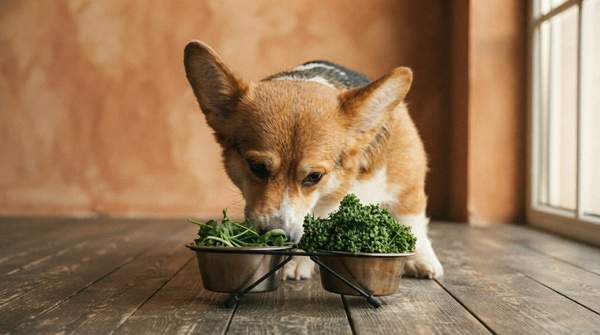
Yes, dogs can eat both spinach and collard greens—but only when prepared correctly, and in modest amounts. Spinach brings iron and vitamins A, C, and K to the bowl, yet its oxalate content makes moderation essential, especially for dogs with kidney sensitivities. Collard greens offer calcium and vitamin K, but their tough fibers demand thorough cooking. The difference between a beneficial supplement and a digestive upset often comes down to a few simple kitchen steps.
The Green Light: Why Leafy Greens for Dogs?
Leafy greens earn their place in a homemade dog diet as a supplement, never a meal replacement. A guide from North Hound Life lists spinach among the most beneficial green vegetables for dogs, noting its impressive iron content alongside vitamins A, C, and K, while collard greens deliver calcium and vitamins A, C, and K. These are meaningful additions, but they work best as small accents to a complete diet rather than the main event.
The appeal is easy to understand. Greens carry nutrients and antioxidants that round out a bowl, and many dogs accept them readily when they're blended into familiar food. The catch is that each green arrives with its own chemistry—oxalates in spinach, tough fibers in collards—and each requires its own preparation to become safe and digestible for a canine stomach.
Spinach vs. Collard Greens: A Nutritional Showdown
Spinach is safe in small amounts for healthy dogs, according to PetMD, but it carries a double caution: its oxalates can contribute to kidney and bladder stones in susceptible dogs when eaten in large quantities, and it also contains isothiocyanates, which can cause severe gastric irritation in large amounts. The Stone Centre at Vancouver General Hospital, which advises human patients on oxalate and stone disease, documents spinach among the foods known to increase urinary oxalate—reinforcing why moderation matters.
Collard greens present a different profile. North Hound Life describes them as offering exceptional nutritional value, particularly for larger breeds such as Rottweilers and German Shepherds, who benefit from the calcium and vitamin K content. Their primary concern is mechanical rather than chemical: as a cruciferous vegetable, raw collards are difficult to digest and may cause gastrointestinal upset, so they should never be served raw.
Cooking changes the oxalate picture measurably. NutritionFacts.org reports that oxalates are water soluble: blanching collard greens can reduce oxalate levels by up to a third, steaming spinach reduces oxalate levels by 30 percent, and boiling cuts spinach's oxalate levels by more than half, with roughly 60 percent leaching into the cooking water. That's the reasoning behind the preparation framework below.
Comparative Guide: Spinach vs. Collard Greens for Dogs
| Leafy Green | Key Nutritional Benefits | Primary Risk/Concern | Required Preparation to Mitigate Risk | Serving Suggestion |
|---|---|---|---|---|
| Spinach | Iron, vitamins A, C, and K, plus antioxidants—available when served in small amounts | Oxalates can contribute to kidney or bladder stones in susceptible dogs in large quantities; isothiocyanates can cause gastric irritation in large amounts | Lightly cook to reduce oxalates (steaming cuts them 30%, boiling more than half), then finely chop or puree into a smooth paste | Occasional treat; roughly 1 tsp per 10 kg of body weight, introduced gradually |
| Collard Greens | Calcium and vitamin K, with benefits particularly noted for larger breeds | Tough fibers make raw collards difficult to digest and may cause gastrointestinal upset | Cook well—blanching can reduce oxalate levels by up to a third—and chop, mince, or puree thoroughly; never serve raw | Introduce gradually in small portions; roughly 1 tsp per 10 kg of body weight |
Mastering Preparation: Do's for Safe Serving
The do's of preparation follow a simple logic: dogs cannot break down raw plant cell walls as efficiently as we can, so the cook does the work first. Start by washing greens thoroughly. Then steam or lightly cook them—this softens fibers, improves digestibility, and, for high-oxalate greens, leaches a meaningful share of the oxalates into the cooking water.
Next, chop, mince, or puree. Halo Collar's editorial team recommends blending steamed greens into a smooth paste and mixing it into regular food, which preserves the nutritional benefits while making the greens easy to digest—and palatable even for hesitant eaters. Finally, keep portions small from the very first serving.
Common Mistakes to Avoid: Don'ts for Dog Owners
The don'ts are where well-intentioned owners most often go wrong. North Hound Life flags a familiar set of errors: feeding excessively large portions that overwhelm digestion, serving raw cruciferous vegetables that cause gas and bloating, mixing too many new foods at once so sensitivities can't be identified, neglecting to chop or puree, and using greens as meal replacements rather than supplements.
Seasonings deserve their own warning. Halo Collar's guidance is blunt: avoid adding salt, butter, oils, garlic, or onions to your dog's greens, since these additions can cause digestive upset or toxicity—onions and garlic are toxic to dogs. Pre-packaged frozen vegetables with sauce or seasonings should also be avoided, so check labels carefully for harmful additives.
Serving Sizes and Introducing New Greens
When introducing any new green, start with a teaspoon and gradually increase the amount, monitoring your dog's response. North Hound Life's serving guidance lands at roughly one teaspoon per 10 kilograms of body weight for both spinach and collard greens, with spinach kept as an occasional treat rather than a daily staple, as Topaz Veterinary Clinic also advises.
These are general guidelines, not formulas. Every dog's needs vary with breed, age, activity level, and health status, so adjust portions to the individual animal and the overall diet. Introduce one green at a time so any sensitivity is easy to spot.
Making the Right Choice: A Practical Conclusion
Dog owners can safely incorporate spinach and collard greens into a healthy adult dog's homemade diet by prioritizing proper cooking and preparation—steaming or boiling to reduce oxalates and soften fibers, then chopping or pureeing for digestibility. Spinach suits dogs without kidney sensitivities as an occasional, lightly cooked treat; collards reward larger breeds with calcium and vitamin K when well cooked and never served raw.
Two boundaries matter. This is not a complete guide to formulating a homemade diet, which requires veterinary or veterinary-nutritionist oversight, and owners of dogs with kidney disease or other health conditions should consult their veterinarian before adding oxalate-containing greens. The measurable indicator of success is simple: the dog shows no signs of digestive upset or adverse reactions after consuming properly prepared greens in moderation. If that holds over several servings, the greens are doing their job.
Sources
- Greens for Dogs: A Complete Guide to Leafy Nutrition — North Hound Life
- What Vegetables Can Dogs Eat? — PETMD
- Oxalate and Stone Disease — Stonecentrevgh
- Friday Favorites: Kidney Stones and Oxalates in Spinach, Chard, and Beet Greens — Nutritionfacts
- Can Dogs Eat Greens? Exploring a Healthy Diet Addition - Halo Collar Blog
- 15 Safe Fruits and Veggies Your Pets Can Eat Daily Safely — Topaz Veterinary Clinic