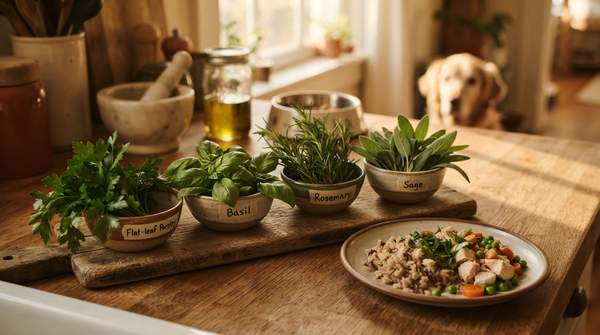
Yes, rosemary, sage, basil, and parsley can all be safely added to homemade dog food in small amounts, and each brings its own potential benefits, from fresher breath to antioxidant support. The keys are preparation—finely chopping fresh leaves or crushing dried ones—and restraint, because dried herbs are more concentrated than fresh and dogs process plant compounds differently than we do. Here is how to choose, prepare, and portion each one.
Why Add Herbs to Your Dog's Diet?
Herbs are not a nutritional necessity for dogs, but in small quantities they can add plant-based nutrients, flavor, and aroma to fresh food diets without artificial additives or heavily processed ingredients. Ann-marie Morgan, writing for The Dog Chef, notes that dog-friendly herbs like parsley, basil, and rosemary are valued for contributing nutrients "even in the smallest quantities."
The specific benefits vary by herb. The Dog Chef describes rosemary as rich in iron, calcium, and antioxidants like carnosic acid, which are said to protect blood vessels, promote heart health, and combat age-related cognitive decline. Basil and similar herbs are described as packed with vitamins A, C, and K, with antimicrobial and antiviral properties that may help the body fight off pathogens. Rooted Promise, a gardening-focused site, groups basil, parsley, mint, oregano, and thyme among herbs that are safe and beneficial, citing improved digestion, enhanced immunity, and better dental health.
One dog owner who publishes a homemade seasoning blend on the blog This Mess is Ours offers a simpler motivation: dried herbs are a safe way to give dogs a nutritional boost, freshen their breath, and make their food more palatable. That anecdotal framing is worth keeping in perspective—these are potential benefits, not guaranteed outcomes—but they reflect why many home cooks reach for the herb garden when preparing their dog's meals.
Essential Safety Principles for Herb Use
Before adding anything new, talk to your veterinarian. Chewy's education guide quotes Stephanie Howe, DVM, a pet health representative at the company, who suggests "working with a pet nutritionist or a pet nutrition company to help ensure well-balanced recipes," especially for homemade food, where balance is the hardest part to get right. She also advises that before introducing any new food into your dog's diet, you should always check with your veterinarian.
Beyond that consultation, a few principles apply across all herbs:
- Start small. Begin with less than the suggested serving and increase gradually only if your dog tolerates it well.
- Watch for reactions. JustFoodForDogs warns that too much basil can upset digestion and that some dogs can be allergic, so monitor your dog after introducing any new herb.
- Use dried herbs sparingly. Because they are concentrated, dried herbs require smaller amounts than fresh.
- Know what to avoid. Not all herbs safe for humans are safe for dogs. Rooted Promise specifically lists onions, garlic, chives, rhubarb, and mushrooms as potentially toxic and worth steering clear of entirely.
These serving suggestions are general guidelines, not prescriptions. Exact amounts should be discussed with your veterinarian based on your dog's health, size, and overall diet.
Comparative Guide to Dog-Safe Herbs
The table below compares the four herbs across the three decisions that matter most: why you might choose that herb, how to prepare it, and how much to use. Serving figures come from pet-industry sources rather than veterinary studies, so treat them as starting points for a conversation with your vet.
| Herb | Primary Health Benefits | Preparation (Fresh/Dried) | Serving Guidance |
|---|---|---|---|
| Rosemary | Antioxidant and antimicrobial; aids digestion; supports heart health; provides iron, calcium, and vitamin B6 | Sprinkle fresh or dried onto food; crush dried rosemary to avoid sharp edges | Chewy suggests 1/8–1/2 teaspoon, dried or fresh; JustFoodForDogs cites a similar range of about 1/2–1 teaspoon dried or a couple of finely chopped fresh leaves—start at the lower end |
| Sage | Antioxidant, antimicrobial, and anti-inflammatory; supports the immune system; soothes digestive issues; provides vitamins A, E, and K plus minerals | Mix fresh or dried sage into your dog's food; chop fresh leaves finely | A small amount mixed in; introduce gradually and watch for adverse reactions |
| Basil | Antioxidant, anti-inflammatory, and antimicrobial benefits; provides vitamins K, A, and C | Finely chop fresh leaves or sprinkle dried basil | A couple of finely chopped fresh leaves or about 1/2–1 teaspoon dried; too much can upset digestion |
| Parsley (fresh) | Supports fresh breath; provides vitamins A, C, and K, calcium, and iron; may support urinary and renal health | Sprinkle finely chopped fresh curly parsley over food | About 1/4 teaspoon per 10 pounds of body weight |
Notice how the table works in practice: if your goal is fresher breath, parsley is the clear pick, portioned by body weight. If you are looking for anti-inflammatory support, sage or basil fits better. For heart and cognitive support, rosemary is the herb most often cited—just crush the dried needles first so there are no sharp edges.
Fresh vs. Dried Herbs: What You Need to Know
The practical difference between fresh and dried herbs is potency. Drying removes water, so a teaspoon of dried herb carries more plant material—and more of its compounds—than a teaspoon of fresh. That is why the guidance skews toward small dried amounts and why The Dog Chef recommends a light sprinkling of dried herbs for every 10 pounds of your dog's body weight, versus about a quarter teaspoon of finely chopped fresh herbs per 20 pounds.
Preparation differs too. Fresh herbs should be finely chopped so they distribute evenly through the food and are easier to digest; dried herbs can be sprinkled directly, though crushing them first (especially rosemary) prevents sharp pieces. While some nutrients may be lost in drying, others are retained or concentrated, which is exactly why dried amounts should be smaller and adjusted carefully.
Whichever form you use, the same caution applies: your dog's liver and kidneys process plant compounds differently than yours, so a dose that seems trivial to a person is not trivial to a small dog. When in doubt, use less and ask your vet.
Making Informed Choices for Your Dog's Diet
Pet owners can confidently incorporate specific dog-safe herbs into homemade food by following safety guidelines and consulting a veterinarian. Choose the herb that matches your goal—parsley for breath, basil or sage for anti-inflammatory support, rosemary for heart and cognitive benefits—prepare it finely, and start at the low end of the serving range.
To know whether the addition is working, monitor your dog for positive changes in digestion, breath, or overall vitality, and absence of adverse reactions after introducing new herbs. If those indicators hold steady over the first week or two, you have found a sustainable addition; if anything changes for the worse, stop the herb and raise it with your vet at the next visit.
Sources
- Herbs and Spices for Dogs - The Dog Chef
- What herbs and vegetables are safe for dogs? — Rooted Promise
- Homemade Dog Food Seasoning — This Mess is Ours
- What Seasonings Can Dogs Have? — Chewy
- Herbs & Spices: What Seasonings Can Dogs Have? — JustFoodForDogs
- Best Dried Herbs for Dogs - The Dog Chef