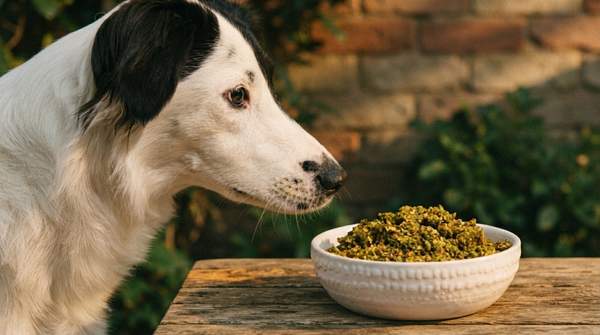
Yes, many fruits and vegetables are safe and genuinely useful additions to your dog's bowl—but only when prepared correctly. Apples, blueberries, carrots, pumpkin, broccoli, and watermelon all offer real nutritional value, from fiber that steadies digestion to antioxidants that support the immune system. The catch is in the details: seeds, cores, rinds, and seasonings can turn a healthy treat into a hazard. This guide maps each safe option to its benefits, its correct preparation, and the parts you must remove.
Introduction: Enhancing Your Dog's Diet with Fruits and Vegetables
Sharing produce with your dog can be a healthy way to add variety to their diet when done correctly, as Topaz Veterinary Clinic puts it in its guide to pet-safe produce. The key word is "correctly." Dogs are not small humans, and plant foods that suit us can harm them—or help them—depending on how they are cut, cooked, and portioned.
Fresh, colorful whole foods like blueberries, carrots, and pumpkin deliver compounds that help the body manage oxidative stress, the everyday cellular wear that builds up as dogs age, according to Larry Pruden's guide to antioxidant-rich foods for dogs. But that same source is blunt about limits: these foods support health, they are not medicine, and they work best fed in small amounts alongside a balanced diet—not as a replacement for it.
Think of produce as a supplement and a treat, not a meal. Veterinary guidance consistently frames these additions as low-calorie extras that add nutrients and variety. Before introducing anything new, check the table below, and remember that portion sizes should always be discussed with your veterinarian based on your dog's size, age, and health.
Dog-Safe Produce: A Quick-Reference Table
Use this table to look up a specific fruit or vegetable before serving it: it tells you what the item offers nutritionally, how to prepare it safely, and which parts to remove. Every entry is drawn from veterinary and canine-health guidance.
| Fruit/Vegetable | Key Nutritional Benefit(s) | Safe Preparation Method | Important Precautions |
|---|---|---|---|
| Apples | Natural carbohydrates for energy; fiber for digestion; low in calories and fat, suited to weight management | Serve fresh slices as a treat | Always remove the stem, core, and seeds, which can be toxic |
| Blueberries | Rich in antioxidants that support the immune system | Sprinkle a few on top of your dog's food | Give in small amounts |
| Carrots | Good source of beta-carotene and vitamin A, beneficial for vision and immune function | Serve raw or cooked, whole or chopped | Cut pieces to an appropriate size to prevent choking |
| Pumpkin | Fiber for digestive health; contains antioxidants | Serve plain and cooked—plain canned pumpkin works | Never use spiced pie filling; avoid added spices and sugar |
| Broccoli | High in fiber and vitamin C, low in fat | Chop up and share as an occasional treat | Safe only in small amounts, per the American Kennel Club |
| Watermelon | Vitamin A, B vitamins, and potassium supporting eye health, metabolism, and muscle function; over 90% water | Serve flesh in chunks, especially refreshing in hot weather | Always remove the rind before serving |
The pattern across the table is consistent: the flesh of these foods is beneficial, but the seeds, cores, rinds, and stems are where trouble lives. Apples are the clearest example—the fruit is a low-fat, high-fiber treat, while the seeds and core are toxic. Watermelon follows the same logic: hydrating and nutrient-rich, but only once the rind is gone.
General Preparation Tips for Safe Serving
Preparation does most of the safety work. Chewy's veterinary-reviewed guidance is explicit: always remove unsafe parts like seeds, pits, rinds, peels, or shells before serving anything. For apples, that means stem, core, and seeds; for watermelon, the rind. When in doubt, cut the item open, strip away anything hard or bitter, and serve only the plain flesh.
Keep everything unseasoned. Butter, oil, and seasonings can make dogs sick, so skip added fats and spices entirely. This is especially important with pumpkin: only plain, cooked pumpkin belongs in a dog's bowl, never the spiced pie filling that contains added sugar and spices. If you are cooking rather than serving raw, plain steaming or boiling with nothing added is the safe route.
Finally, guard the garden as well as the kitchen. The American Kennel Club advises skipping tomatoes altogether and keeping dogs away from tomato plants, since a dog would need to eat a large amount of the plant to get sick, but caution is the better policy. Grapes, raisins, onions, and cherry pits are widely recognized as toxic to dogs and should never be offered in any amount or form.
Introduce new foods one at a time and in small quantities, so you can watch how your dog responds. Blueberries illustrate the principle well: a few sprinkled on top of food is a flavor boost and an antioxidant addition, not a handful. Moderation is not a footnote—it is the operating rule for every item in the table.
Making Informed Choices for Your Dog's Diet
Dog owners can confidently introduce a variety of safe fruits and vegetables as healthy supplements to their dog's diet, provided they adhere to proper preparation methods and strictly avoid toxic items. The decision framework is simple: check the item against the table, remove every seed, pit, core, rind, and stem, serve it plain and unseasoned, and keep the quantity small.
The measurable indicator of success is straightforward: the dog owner successfully identifies a safe fruit or vegetable, prepares it correctly—removing seeds or pits and cooking where necessary—and avoids all toxic items, resulting in no adverse health reactions in their dog. If your dog ever shows unusual symptoms after eating something new, contact your veterinarian; this guide is a supplement to veterinary advice, not a substitute for it.
Sources
- 15 Safe Fruits and Veggies Your Pets Can Eat Daily Safely — Topaz Veterinary Clinic
- Antioxidant Rich Foods for Dogs: An Honest Guide — PAWDEGA USA
- 10 Best Fruits and Vegetables for Dogs — Chewy
- Fruits & Vegetables Dogs Can and Can't Eat — American Kennel Club