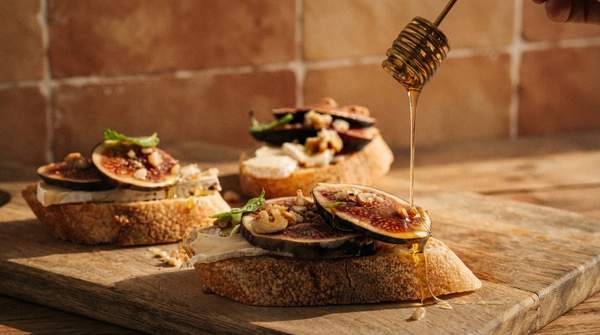
The secret to a sophisticated cheese board is not one perfect honey—it is knowing which flavor family your honey belongs to and choosing cheese accordingly. Expert advice from beekeepers and cheesemongers alike converges on a simple truth: light, floral honeys belong beside mild, creamy cheeses, while dark, malty honeys can stand up to blues and aged wheels. This guide organizes common varietals into flavor profiles, explains the two principles behind every great pairing, and delivers a quick-reference chart for shopping and assembling.
Understanding Honey Flavor Profiles
Not all honeys are interchangeable. Orange blossom honey, as Weeks Honey Farm describes it, brings "light citrus-floral notes that brighten every bite," making it one of the most crowd-pleasing options on a board. Savannah Bee Company places orange blossom alongside lavender and acacia in the lighter register, with acacia standing out as "especially good when you want a milder flavor" and lavender offering something "more floral and a little more transportive."
At the opposite end sit the dark, intense honeys. Buckwheat honey carries what Weeks Honey Farm calls "dark, molasses-like richness," a body with enough weight to hold its own against assertive cheese. Chestnut honey, similarly, has what cheesemonger Ronquillo—speaking to The Cheese Professor—calls "a very distinctive flavor profile" that "needs a cheese that can hold its own against its bitterness." Wildflower honey sits in a versatile middle ground, complex enough to matter but rarely overwhelming. And hot honey, the sweet-heat favorite of Wisconsin cheesemakers, adds a spicy dimension that changes the pairing math entirely.
The Core Principles of Honey and Cheese Pairing
River Bluff Honey frames the fundamental dynamic in terms of contrast: cheese is predominantly salty, savory, and rich, while honey is sweet and viscous—"opposing flavor profiles that balance and amplify each other rather than competing." The sweetness of honey cuts through the fat and salt of cheese, making both flavors more vivid. This is why a sharp, salty blue cheese transforms under a drizzle of dark honey: the sweetness counters the pungency, and, as Weeks Honey Farm puts it, the pairing creates "a bold, memorable contrast neither ingredient could achieve alone."
The second principle is matching intensity. Huckle Bee Farms puts it plainly: match the honey to the cheese's strength. Mild cheeses like Brie and fresh chèvre do well with light, floral honeys such as clover or orange blossom, while strong cheeses like blue and aged Gouda pair nicely with bolder honeys. Contrast works when both sides have weight; matching works when one side would otherwise drown the other. A delicate acacia honey disappears against a pungent gorgonzola, just as a molasses-dark buckwheat overwhelms fresh mozzarella.
Cheese Grotto's founder Jessica Sennett adds a nuance worth remembering: opposites can also complement, comparing buckwheat honey and fresh cheese to pairing a dark stout with a fresher style. And Ronquillo calls matching funky washed-rind cheeses with spicy, nuanced honeys "a mind-blowing experience." In other words, intensity-matching is the reliable default, but deliberate contrast between equals is where the memorable pairings live.
Your Essential Honey & Cheese Pairing Chart
Use this chart as your quick reference: find your honey's flavor family, then shop for the cheese column that matches. The reasoning is straightforward—each row maps a honey's intensity to cheeses that can either mirror its delicacy or absorb its boldness without being flattened.
| Honey Flavor Profile | Common Varietals | Pairs Best With | Specific Cheese Examples |
|---|---|---|---|
| Floral & Light | Clover, orange blossom, acacia, lavender | Fresh, soft, and mild cheeses | Fresh chèvre, ricotta, Brie, mozzarella |
| Rich & Malty | Buckwheat, chestnut, wildflower | Aged, firm, and pungent blue cheeses | Blue cheese, Roquefort, gorgonzola, aged Gouda, aged cheddar |
| Sweet Heat (single example) | Hot honey | Sharp aged cheeses and warm, oven-baked styles | Aged cheddar, blue cheese |
The Floral & Light row follows the intensity rule: delicate honeys complement subtle cheeses. Huckle Bee Farms recommends light floral honeys like clover or orange blossom with Brie and fresh chèvre, and Savannah Bee Company notes orange blossom's floral-citrus lift suits lighter applications. The Rich & Malty row applies the contrast principle: Weeks Honey Farm argues that blue cheese "demands a honey with enough body to stand up to its sharp, salty punch," and Ronquillo specifically matches French chestnut honey with Roquefort and Italian gorgonzola.
Hot honey earns its row from a single, consistent recommendation. Daylon Gardner of Gardners Wisconsin Cheese calls aged cheddar "the gold-standard hot honey partner" because the sharpness pushes against the sweet, the fat softens the heat, and the crystalline crunch adds texture. He also suggests drizzling it over warm oven-baked cheese. Note that buckwheat honey is the one contested varietal: Cheese Grotto recommends it with fresh and bloomy-rind cheeses precisely because opposites can balance, while Weeks Honey Farm pairs it with blue cheese for a bolder contrast. Both are legitimate starting points—choose based on whether your table skews gentle or assertive.
Assembling and Presenting Your Sophisticated Cheese Board
Once the pairings are chosen, presentation does the rest. Serve each honey in its own small dish with a drizzling spoon or honey dipper, rather than pouring it directly over the cheeses—guests can then control how much sweetness lands on each bite, and one honey never contaminates another. River Bluff Honey emphasizes that texture matters as much as flavor: the creaminess or crumble of good cheese against the sticky, flowing quality of honey is what makes each bite more interesting than either ingredient alone, so keep the honey fluid and the cheeses at their best consistency.
Accompaniments should echo the pairings already on the board. Weeks Honey Farm suggests sliced baguette, green apple, and honey-roasted pecans alongside an orange blossom pairing, and thick sourdough crisps, sliced pear, and candied walnuts with a buckwheat-and-blue combination. Infused honeys, as Huckle Bee Farms notes, offer a playful way to introduce new flavor layers without crowding the board with extra components. A wedge of honeycomb, where you have one, makes both a visual centerpiece and an edible one.
Beyond the Board: Experiment and Enjoy
Readers should confidently experiment with honey and cheese pairings, using this flavor-profile framework as a foundation rather than a rulebook. These are recommendations, not prescriptions—pairing is subjective, and as Ronquillo observes, "there's plenty of room for experimentation." The guide covers common varietals, not every honey on the shelf, and it deliberately leaves wine out of the equation.
The measurable indicator of success is simple: the successful creation of a balanced and visually appealing cheese board with harmonious honey and cheese combinations. If your floral honey makes a fresh chèvre taste brighter rather than sweeter, and your buckwheat makes a gorgonzola taste less pungent rather than more, the framework has done its work. Start with one honey from each flavor family, invite guests to drizzle and compare, and let the board teach you which contrasts your own table loves best.
Sources
- Top 10 Honey and Cheese Pairings for the Perfect Cheese Boar — Weeks Honey Farm
- Honey Pairing Guide: Cheese Boards, Tea & More — Savannah Bee Company
- The Complete Guide to Pairing Honey With Cheese — River Bluff Honey
- Cheese and Honey Pairings: A Charcuterie Lover’s Guide — Huckle Bee Farms LLC
- Sweet Like Honey & Cheese Pairing Guide — Cheese Grotto
- Exploring the Magic of Honey Paired with Cheese — The Cheese Professor
- Hot Honey Cheese Pairings — Gardners Wisconsin Cheese and Sausage