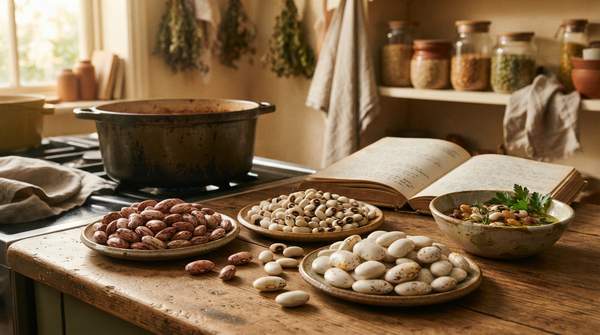
The best heirloom bean for your dish depends on what you want in the pot: a creamy purée, a brothy soup, or a salad where the bean holds its own. A thin-skinned borlotti like the Cranberry bean makes a rich, indulgent broth suited to minestrone; a giant Royal Corona stays creamy and meaty enough to star in salads or under pesto; a mild Yellow Eye is a natural for New England baked beans. Here is how six distinct varieties compare, and why.
Understanding Heirloom Beans: More Than Just a Bean
Heirloom beans are old varieties kept outside the narrow world of modern commodity crops. Rancho Gordo, the Napa-based specialty purveyor, explains the trade-off plainly: heirlooms tend to yield less and are harder to grow, but the payoff is "unique flavors and textures that you don't find with bland commodity beans."
That difference is not marketing folklore to the people who cook them. A writer for Beanstory, recalling the first heirloom bean that changed their mind, described the moment this way: "it was like the lights came on full blast. The fog had lifted." The bean that did it was a side dish of "meaty white Corona beans" — the same variety Rancho Gordo now smothers in pesto on its recipe pages.
What makes one heirloom right for soup and another right for salad comes down to three things that vary by variety: how the skin and interior behave when cooked, how much flavor the bean itself carries versus absorbs, and how much starch it releases into the liquid. A bean that slumps into a thick broth is wrong for a salad; a bean that stays firm and separate is wrong for refried beans.
Heirlooms also vary among themselves. A home grower's bean trial run by Country Trading Co found that Borlotti rated as "a good flavour absorber" but fell flat next to the nutty, sweet Maerawhiti and the chestnut-sweet Good Mother Stallard — a reminder that within the heirloom category, variety choice matters as much as the heirloom label.
Heirloom Bean Varieties: A Culinary Comparison
The table below synthesizes the characteristics described by the specialty purveyors and culinary writers cited throughout this guide. Read it against your recipe: if the dish is brothy, start with the broth column; if the beans must stay whole, start with texture.
Heirloom Bean Culinary Guide
| Bean Variety | Texture Profile | Flavor Profile | Broth Quality | Best For |
|---|---|---|---|---|
| Marcella (cannellini) | Thin-skinned, creamy when cooked well | Mild; a cannellini type grown in California from Italian Sorana seed | Creamy bean body that suits soups and purées | Italian-style soups, stews, purées |
| Cranberry (borlotti) | Thin-skinned, velvety | Good flavor absorber, per Country Trading Co's trial notes on Borlotti | Rich, indulgent broth | Minestrone, pasta e fagioli, classic Italian dishes |
| Yellow Eye | Creamy | Mild | Good in soups | New England baked beans, soups |
| Domingo Rojo | Small, dense | Classic red-bean character | Thick broth | Red beans and rice |
| Mexican Pinto | Melt-in-the-mouth creamy with thin skins, per Country Trading Co's trial | Mild; takes on surrounding flavors | Blends smoothly | Refried beans, mashed preparations |
| Royal Corona | Large, creamy, meaty | Rich enough to anchor a dish | Holds its own in simple presentations | Salads, simple beans with pesto, dishes where the bean is the star |
The logic behind these pairings is straightforward. A soup bean should give starch to the liquid, so the thin-skinned Cranberry and the dense Domingo Rojo — with their rich and thick broths respectively — earn their place in minestrone and red beans and rice. A salad bean must survive tossing and chewing, which is why the giant, meaty Royal Corona works so well standing alone or with bold sauces. A purée bean should collapse willingly, which is exactly what the melt-in-the-mouth Mexican Pinto does.
Skin behavior is the hidden variable. The Ambrosian Pantry's cooking guide singles out Marcella and Cranberry as thin-skinned, which helps them cook evenly and release their creaminess. By contrast, Country Trading Co's trial found the Persian Lima's firm skin "held the beans together," making that bean "well suited to bean salad" — the structural opposite of a mashing bean.
Choosing the Right Bean for Your Dish
Start from the finished dish and work backward. For a brothy minestrone or pasta e fagioli, Rancho Gordo points to the Cranberry bean precisely because its velvety thin skin and rich broth improve the whole pot rather than just the beans. For red beans and rice, the Domingo Rojo's dense body and thick broth match the dish's signature gravy-like sauce, per The Ambrosian Pantry.
When the beans must remain distinct — a cold salad, a warm bowl with pesto — reach for structure. The Royal Corona is Rancho Gordo's "versatile giant," big and creamy enough that the bean itself is the point; their recipe for Royal Coronas smothered in pesto is essentially a dish built to show the bean off. If you want a baked-beans classic, the mild, creamy Yellow Eye is the traditional New England choice.
For anything mashed or blended, choose a bean that surrenders. Country Trading Co's trial found the Mexican Pinto produced well and cooked to a creamy texture with thin skins — ideal for refried beans where the bean is a canvas for seasonings and fat. The same trial showed how much variety choice matters even within one pot: their Borlotti absorbed flavor nicely but was outclassed by sweeter, nuttier trial winners.
Two practical caveats apply to every variety above. Cooking times are estimates, and the purveyors' descriptions assume well-handled dried beans; fresher beans generally cook faster. And this guide covers a small, popular selection — Marcella, Cranberry, Yellow Eye, Domingo Rojo, Mexican Pinto, and Royal Corona — not the full heirloom catalog, and it says nothing about growing or harvesting them.
Elevate Your Cooking with the Right Heirloom Bean
Select heirloom beans based on their specific culinary characteristics — texture, flavor, and broth quality — to achieve desired dish outcomes. Match the mechanism to the meal: starch-releasing, thin-skinned beans for broths and purées; dense, firm-bodied beans for salads and dishes where the bean stars.
The measurable indicator that you have chosen well is simple: the cooked beans consistently achieve the desired texture — creamy where creaminess is the goal, firm and intact where the dish needs structure — and contribute appropriately to the dish's flavor and broth. If your Cranberry beans thicken a minestrone into something silky, or your Royal Coronas hold their shape under a spoonful of pesto, the variety has done its job.
Sources
- Are Heirloom Beans Better? — beanstory
- The Best Heirloom Bean Trial and Recipes — Country Trading Co. NZ
- How to Cook Heirloom Beans: Soak, Salt, Broth — The Ambrosian Pantry
- Heirloom Beans — Rancho Gordo