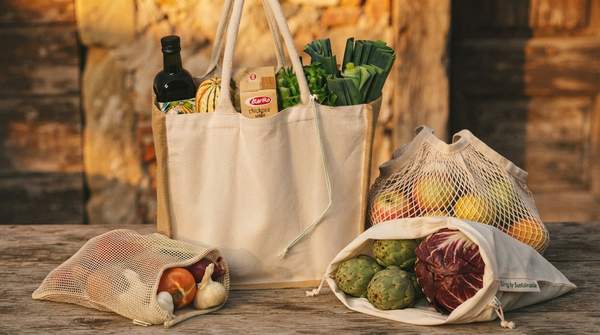
The most effective way to reduce packaging waste at the farmer's market is simple: bring your own reusables and use them repeatedly. A handful of sturdy bags, a few clean containers, and a couple of tea towels can eliminate most single-use packaging from your trip. The environmental group Go Green HP, which runs a farmers market plastic reduction campaign, lays out exactly this approach — and the reasoning behind it is more nuanced than "plastic bad, everything else good."
Why Your Packaging Choices Matter at the Farmer's Market
There's a quiet irony at the farmers market: shoppers come seeking healthy, sustainable food, yet it often travels home in single-use plastic bags and containers. Go Green HP points to the core problem — plastic doesn't biodegrade. It only breaks into smaller fragments that end up in air, water, soil, and the bodies of fish, wildlife, and people. The group cites a University of Newcastle study estimating we each consume roughly a credit card's worth of plastic per week.
There's a second concern closer to your dinner plate. According to Go Green HP, chemicals from plastic packaging have been shown to leach into food, meaning the wrapper isn't just an environmental issue but a potential health one too. And even when you dutifully tote that plastic bag to the curb, recycling may not be an option: as one packaging-industry source told the trade publication The Packer, "many areas do not have the infrastructure in place yet to recycle single-use plastics."
Common Packaging You'll Encounter (and Alternatives)
Walk down a market row and you'll see a range of packaging, from flimsy plastic produce bags to more thoughtful options. Vendor-focused guidance published on Find Homegrown describes what sellers increasingly use: small kraft paper bags, which are cheap and compostable; mesh produce bags for apples, small squash, garlic, and citrus; and simple rubber bands or twist ties for bunched herbs, greens, radishes, and green onions.
Notably, mesh bags do double duty — customers often keep and reuse them for their own grocery shopping, extending their life well beyond the market stall. The same vendor guidance notes that farmers market customers generally appreciate sustainable packaging choices, with kraft paper, compostable bags, and glass jars fitting the local food aesthetic. That matters for you as a shopper: when you bring your own containers or decline a bag, you're reinforcing a preference vendors already notice.
Understanding the Environmental Impact of Different Bags
Here's where the story gets more interesting than a simple plastic-versus-paper verdict. A life cycle assessment (LCA) examines a product's environmental impact at every stage — raw material extraction, manufacturing, transport, use, and disposal, as Renée Cho explains in Columbia Climate School's State of the Planet. By that fuller measure, the rankings can surprise you.
One U.S. study by Boustead Consulting and Associates, cited in a California LCA project, found that single-use plastic bags actually require less energy, fossil fuel, and water to produce than an equivalent amount of paper bags. That doesn't make plastic the winner — it omits end-of-life problems like litter and fragmentation — but it does mean paper isn't automatically the greener choice.
The real takeaway, echoed across LCA reviews, is that reuse is what matters most. A 2008 LCA report on grocery bags concluded that "the issue is not paper or plastic, but rather finding ways to reduce, reuse, and recycle both of them — in that order," noting that durable tote bags and reusing disposables yield significant reductions in energy use, pollution, solid waste, and greenhouse gas emissions. In other words: the bag you already own, used fifty times, beats any bag made new.
Your Zero-Waste Farmer's Market Checklist
Here is the practical core of the guide: a two-part checklist, split between what to prepare before you leave and what to do once you're among the stalls. The items and actions come from Go Green HP's farmers market toolkit.
| What to Bring (Before You Leave) | What to Do (At the Market) |
|---|---|
| Reusable shopping bags — stored in the front seat of your car or hanging on your doorknob so you actually remember them | Hand over your own bag before the vendor reaches for a plastic one |
| Clean takeout containers — tucked inside your shopping bags to protect berries, muffins, and other delicate items in transit | Ask vendors to place loose produce, berries, or baked goods directly into your containers |
| Mesh produce bags — for items like green beans, apples, or citrus sold loose | Choose bunched items (herbs, radishes, greens) that need only a rubber band or twist tie |
| Tea towels — for wrapping lettuces and greens, which can then go straight into the crisper | Skip a bag entirely for sturdy produce like squash or bunches you can carry loose |
The logic behind each row is the same: every single-use bag or container you avoid is one that never needs to be produced, transported, landfilled, or recycled — and every reusable you deploy gets more efficient with each additional trip.
Actions to Take at the Market for Less Waste
Preparation only works if you follow through in the moment. The simplest habit is speaking up early: hand the vendor your bag or container before they've pulled a plastic one off the roll. Vendors are used to the request, and the Find Homegrown guidance suggests many will welcome it, since sustainable choices align with what their customers expect.
Think in terms of substitutions rather than sacrifices. Berries and cherry tomatoes travel better in a rigid container than a squashed plastic clamshell anyway. Greens wrapped in a tea towel go straight from market to crisper drawer without an intermediate plastic bag. Loose apples in a mesh bag look no different from apples in a flimsy disposable one.
Beyond your own basket, Go Green HP suggests spreading the practice: share their toolkit with your local market manager, encourage a friend to set up a Bag Share Bin — a communal stash of reusable bags for forgetful shoppers — or volunteer with a local environmental group. Individual habits scale when a whole market adopts them.
Making a Difference, One Market Trip at a Time
Commit to bringing reusable items and actively seeking packaging-free options on your next farmer's market visit. You don't need a perfect zero-waste kit on day one; start with bags you already own, add containers and towels as the habit settles in. The measurable indicator of success is simple to track: the number of single-use bags or containers you bring home from the market decreases over time. Count them after your next trip, then again a month later — that shrinking pile is your evidence that the reusable hierarchy, reduce first and reuse always, is working in your own kitchen.