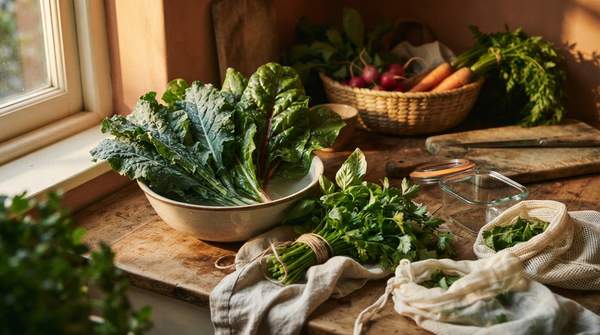
Bringing home a bounty of vibrant greens from the farmer's market is one of life's simple pleasures, a tangible connection to the earth and the hands that cultivated your food. But the joy can quickly fade if those beautiful greens wilt before you have a chance to enjoy them. The good news is that with the right home storage methods, specifically tailored to the type of green, you can significantly extend their shelf life, preserve their crispness, and minimize food waste. The secret lies in understanding how greens lose their freshness and how to effectively manage moisture. Understanding Why Greens Wilt: The Role of Water
Imagine a fresh head of lettuce or a bunch of kale, vibrant and full of life. This vitality comes from water. As Nourse Farm explains, leafy greens like lettuce, kale, and Swiss chard are composed of more than 90% water. This high water content is precisely what gives them their satisfying crispness and firm texture.
However, the moment these greens are harvested, they are cut off from their natural water source. Despite this, they continue to "breathe" and use up their internal moisture. This continuous process of moisture loss is the fundamental reason greens begin to wilt and lose their texture, often within a day or two of harvest. Just as our bodies need proper hydration to thrive, greens require careful moisture management to maintain their crispness and extend their life in your kitchen. Understanding that "water is everything" for greens, as Nourse Farm emphasizes, is the first step toward effective preservation.
Reviving Wilted Greens: A Simple Rehydration Trick
Don't despair if you discover your once-vibrant greens looking a bit limp and tired in the refrigerator. Often, they can be brought back to life with a simple rehydration technique. Nourse Farm suggests a straightforward method: fill a bowl or your kitchen sink with cold water and submerge your wilted greens for 10 to 30 minutes. For the best results, consider placing them in the refrigerator while they soak.
The cold temperature plays a crucial role in this revival process. It slows down the natural deterioration of the greens and, more importantly, helps the plant cells reabsorb water more effectively. As the greens take in water, the internal pressure within their cells increases, which is what restores that desirable crisp bite and firm texture. This simple trick can transform seemingly lost produce, allowing you to enjoy your farmer's market investment for longer and significantly reduce food waste.