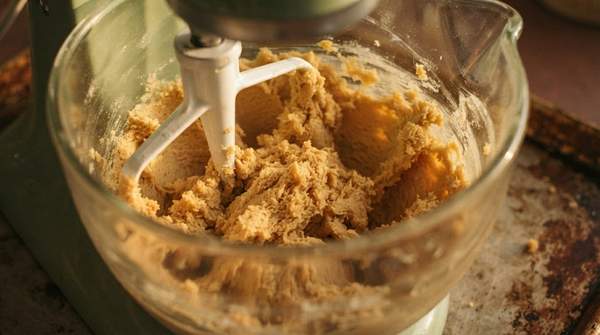
Creaming works because sugar crystals mechanically carve air pockets into soft butterfat, and those pockets are where baking powder and baking soda do their lifting. The Exploratorium's science of cooking team explains that carbon dioxide released by chemical leaveners does not create its own resting places—it only gravitates to air pockets you have beaten into the fat. That single fact explains why a rushed creaming step produces dense, flat bakes even when the leavening is measured perfectly. Here is how the process works, stage by stage, and how to read your mixture as you go.
The Foundation of Fluffy Bakes: Understanding Creaming
Creaming means beating room-temperature butter and sugar together until the mixture turns light, pale, and fluffy. Sally McKenney, writing for Sally's Baking, frames it as a structure-building step rather than a mixing formality: the process is crucial for developing the structure and texture of a baked good, and the teeny-tiny air pockets created during creaming expand during baking. Recipes that call for the method are asking you to build a hidden framework that later determines the crumb.
The step also does quieter work. As Jessica Lonsdale explains in her guide for Just Little Luxuries, creaming ensures the butter and sugar are evenly distributed so the batter or dough is smooth and uniform. Skipping or rushing the step, she cautions, can lead to dense, flat, or unevenly baked treats. So the visual transformation in the bowl is not cosmetic—it is the texture of the finished bake being decided in advance.
The Science of Aeration: How Sugar Transforms Butter
The mechanism is mechanical, not mysterious. Butter is a fat, and fats are excellent at trapping air; when you beat butter, its structure softens and creates pockets that can hold air. Sugar supplies the abrasive action. Its granules act like tiny scrapers, rubbing against the butter to open still more pockets. The result is a light, fluffy mixture full of microscopic air bubbles.
The Institute of Food Science and Technology describes the same process at the molecular level: creaming repeatedly splits apart and presses together fat molecules while simultaneously trapping tiny air pockets in the mixture. With sugar present, the mixture forms a stable combination of sugar crystals, fat, and air. That stability matters—this is not loose air stirred into a batter, but a durable foam that will survive the additions of eggs and flour.
Timing varies with your tools and ingredients. The Exploratorium notes that beating the fat well and then gradually adding the sugar until the mixture is light and fluffy can take anywhere from two to three or four minutes, depending on ingredient temperature and mixer power; some recipes specify even longer. A timer is only a starting point—the visual and textural cues are the real test of doneness.
Creaming Stages: Visual Cues and Scientific Explanations
Use this diagnostic framework to judge where your mixture is and what is happening inside it. Each observable cue corresponds to a specific scientific event, so you can troubleshoot in the moment instead of discovering a problem in the finished crumb.
| Stage | What you observe | What is happening | Impact on the bake |
|---|---|---|---|
| Aeration begins | Butter lightens in both color and texture; mixture takes on a slightly grainy look | Jagged edges of sugar crystals drag in air; fat molecules split apart and press together, trapping tiny air pockets | First stable air cells form inside the butterfat |
| Aeration progresses | Mixture grows noticeably lighter and continues gaining volume as you beat | Sugar, fat, and air combine into a stable mixture; air pockets multiply and remain trapped | The stable air network that leavening gases will later occupy takes shape |
| Optimal aeration | Mixture is light, fluffy, and pale, with a significantly airy texture | A stable network of microscopic air cells is fully established, ready to interact with leavening gases | Sets up the rise, tenderness, and even crumb of the finished bake |
| Leavener interaction | In the oven, the batter rises visibly and evenly | Carbon dioxide from baking powder or soda gravitates to the creamed air pockets; the bubble network expands with heat | Gives the bake height, softness, and a light, tender, even crumb |
The diagnostic value comes from linking cue to cause: if your mixture never lightens in color or texture, the air pockets the leavening gases need are not being formed, and the finished bake will reflect it. If it does reach that pale, fluffy state, you have built the framework the rest of the recipe depends on.
The Critical Link: Creaming and Chemical Leaveners
This is where creaming stops being a texture trick and becomes the precondition for rise. As a cake bakes, carbon dioxide released from leaveners such as baking powder and baking soda gravitates to the air spaces created by creaming. As the batter heats, that honeycomb network of bubbles expands, making the cake rise and its texture light and tender.
Lonsdale describes the same partnership from the baker's side: the trapped air helps leavening agents work more effectively, resulting in a better rise, and those bubbles expand further in the oven's heat, creating height, softness, and an even crumb. The Institute of Culinary Education adds that the emulsion formed once eggs are incorporated allows steam and carbon dioxide to be trapped in the batter as it bakes, which is what causes the cake to rise.
The implication for troubleshooting is direct. If your leavening is fresh and correctly measured but your bakes come out dense, the failure point may be earlier in the process: too few air pockets for the carbon dioxide to occupy. Creaming is where the work happens; the leavener only amplifies what you have already built.
Optimal Butter Temperature for Successful Creaming
Every source on the technique converges on the same starting condition: room-temperature butter. The creaming method, as the Institute of Culinary Education describes it, calls for beating room-temperature butter and sugar together until light and fluffy, and the Exploratorium likewise specifies beating the fat at room temperature before gradually adding the sugar.
The reason is structural. Butter's solid, crystalline structure is what allows it to trap air at all—softened fat can be split apart and pressed together into a stable foam, while fat that is either too firm or fully melted cannot hold the same network. Following that logic, butter that is too cold will resist the shearing action of the sugar crystals and incorporate little air, while butter that is too warm will have lost the solid structure needed to keep air pockets trapped in place. Room temperature is not a convenience; it is the state in which the fat can do its aerating job.
Achieving the Perfect Crumb: Your Creaming Checklist
To ensure a light and tender crumb in baked goods, consistently cream butter and sugar until the mixture is visibly lightened, fluffy, and increased in volume, indicating sufficient air incorporation. Start with room-temperature butter, beat the fat before gradually adding the sugar, and let the color and texture guide your timing rather than the clock.
You will know the step is complete when you see the measurable indicator the evidence points to: the creamed mixture has a pale, almost white color and a significantly airy, fluffy texture, resembling whipped cream, and has markedly increased in volume. When those cues appear, the microscopic air network is in place—and the carbon dioxide from your leavener finally has somewhere to go.
Sources
- Science of Cooking: Ask the Inquisitive Cooks! — ANNEX
- How to Cream Butter & Sugar (Video) - Sally's Baking
- The Science Behind Creaming Butter and Sugar — Just Little Luxuries
- Fats and oils: aeration — Institute of Food Science and Technology
- Beyond Flavor: The Science of Butter — ICE