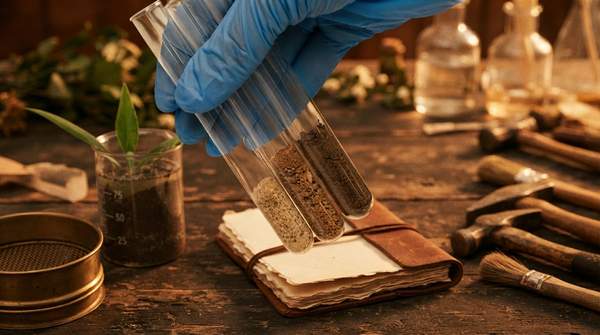
Without even cleaning, a maple cutting board can reduce E. coli detection rates by a factor of 100 within two hours. A maple cutting board's swift, natural sanitation challenges the common kitchen belief that only rigorous washing can mitigate bacterial risks on cutting surfaces.
Many home cooks rely on plastic cutting boards for perceived hygiene and convenience, but scientific studies show wood actively reduces bacterial contamination more effectively and new materials offer even greater benefits. This widespread belief in plastic's hygienic superiority is scientifically unfounded and potentially puts consumers at greater risk.
The Surprising Science of Wood vs. Plastic
Maple cutting boards significantly reduced E. coli detection rates to 1.7 log10 cfu/cm2 within two hours, even without cleaning, according to pubmed. While Staphylococcus aureus showed a delayed reduction on maple, HDPE (plastic) boards consistently had higher detection rates for both bacteria compared to sugar maple wood, pubmed reports. Wood's natural properties create a hostile environment for common kitchen bacteria, actively reducing existing populations—a capability plastic lacks. Wood's natural properties make it a more sanitary choice than commonly perceived.
A Decade of Durability: Real-World Wood Performance
Marian Bull has used the same maple cutting board from John Boos for nearly a decade, according to The Guardian. Marian Bull's nearly decade-long use of the same maple cutting board proves the resilience of high-quality wooden boards under regular kitchen conditions. The Boardsmith Maple End-Grain Cutting Board stands as a top choice, reflecting the market's appreciation for superior craftsmanship. Well-crafted wooden boards offer exceptional durability and consistent performance, proving their value as a sustainable kitchen investment that far outlasts typical plastic options.
Beyond Wood: The Rise of Advanced Materials
The Vanotium Titanium Cutting Board features a solid titanium alloy surface that repels moisture, odor, and microbial growth, according to newswire. The Vanotium Titanium Cutting Board's innovative design actively prevents juices, fats, or microbes from penetrating the board, newswire states. Such advanced materials are emerging to offer even higher levels of hygiene and performance, potentially setting a new gold standard for kitchen prep surfaces.