For many home gardeners, the journey to a bountiful harvest begins long before the last frost, with tiny seeds nurtured indoors. Starting seeds inside offers a head start on the growing season, particularly in regions with shorter summers, and allows for healthier, more robust plants. However, the choice of container can significantly influence a seedling's development, transplant success, and even your gardening budget. This guide explores three popular indoor seed-starting methods—soil blocks, plastic seed trays, and biodegradable peat pots—to help you cultivate your garden dreams with confidence. Soil Blocks: Cultivating Strong Roots
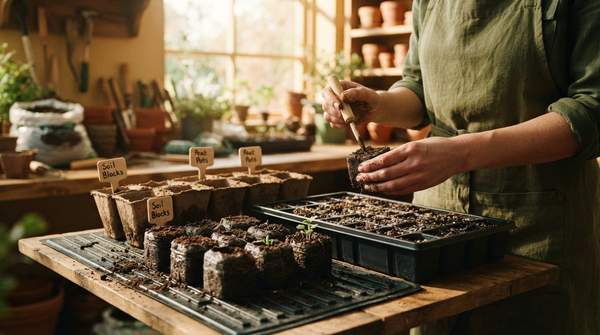
Soil blocks represent an innovative approach to indoor seed starting, championed by experienced gardeners like Eliot Coleman, a pioneer in the method. This technique involves compressing a specialized, moistened soil mix into freestanding blocks, eliminating the need for traditional plastic containers.
One of the primary advantages of soil blocks is their positive impact on root development. As roots grow to the edge of a soil block, they naturally stop growing due to exposure to air, a process known as "air pruning." This encourages the development of compact, non-circling root systems, preventing seedlings from becoming root-bound, as noted by Aaron Steil of Yard and Garden. This healthy root structure is crucial for minimizing transplant shock when seedlings are moved to the garden, as the entire intact root ball can be planted without disturbance. Jill, a gardening writer for The Beginner's Garden, also highlights the ease of transplanting and the observed difference in seedling health.
From an environmental perspective, soil blocks offer a promising alternative for gardeners aiming to reduce plastic use. There's no need to purchase new seed starting containers each year or sterilize reused ones, according to Jill. This reduces plastic waste and the effort associated with container maintenance.
However, adopting soil blocks does come with an initial investment: the purchase of a soil block maker tool. While this is a one-time cost that can pay off in the long run, it represents an upfront expense. The process of making soil blocks also involves a specific technique of compressing the soil mix, which may have a learning curve for new users.
For those interested in crafting their own soil block mix, Eliot Coleman's recipe, shared in his book *The New Organic Grower*, is a respected starting point. It typically combines ingredients such as peat moss, lime, coarse sand or perlite, organic fertilizer, compost, and topsoil. A specific blend might include 30 parts brown peat, 1/8 part lime, 20 parts coarse sand or perlite, 3/4 part base fertilizer, 10 parts soil, and 20 parts compost.Plastic Seed Trays: The Versatile Standard
Plastic seed trays, often featuring individual cells or compartments, are a ubiquitous sight in the world of indoor seed starting. Their widespread availability and straightforward use make them a common choice for many home gardeners.
The initial cost of plastic seed trays can vary. While some options are inexpensive, they may be less durable and require annual replacement, leading to recurring costs. More durable, high-quality trays are available, such as the extra-strength 1020 trays mentioned by Deanna Talerico of Homestead and Chill, which can withstand repeated use. However, reusing plastic trays necessitates thorough sterilization to prevent the spread of diseases, adding an extra step to the seed-starting process.
One potential drawback of plastic trays, particularly those with smaller cells, is the risk of seedlings becoming root-bound. Without the air-pruning effect seen in soil blocks, roots can begin to circle within the confines of the cell if not transplanted in a timely manner. This can stress the plant and hinder its growth after transplanting.
From an environmental standpoint, plastic trays contribute to plastic waste if they are not reused diligently. While durable options can last for many seasons, single-use or less robust trays can quickly accumulate in landfills.
Despite these considerations, plastic trays remain a popular choice due to their accessibility and the wide variety of sizes and configurations available, allowing gardeners to select options that best fit their space and plant needs.
Biodegradable Peat Pots: Gentle on Roots and Earth
Biodegradable peat pots offer an appealing option for gardeners seeking an eco-friendly and gentle method for starting seeds, particularly for plants sensitive to root disturbance. These pots are designed to break down once planted, allowing seedlings to be transplanted directly into the garden without removing them from their container.
The primary benefit of peat pots lies in their ability to minimize transplant shock. Because the entire pot, with the seedling still inside, can be placed directly into the soil, the roots remain undisturbed. This makes them ideal for plants that typically do not transplant well, as noted by the University of Minnesota Extension. As the pot decomposes, the roots can grow freely into the surrounding garden soil.
Peat pots are generally easy to use, as they come pre-formed and ready for soil and seeds. Their biodegradable nature also aligns with environmentally conscious gardening practices, reducing the reliance on plastic.
However, peat pots do represent a recurring cost, as they are typically a single-use item that needs to be purchased each season. While they offer convenience and reduce transplant shock, gardeners should consider this ongoing expense when evaluating their overall cost-effectiveness.
Comparative Analysis: Choosing Your Method
Selecting the optimal indoor seed-starting method depends on a gardener's priorities, whether they prioritize initial cost, ease of use, root health, or environmental impact. Here's a comparative look at soil blocks, plastic seed trays, and biodegradable peat pots:
Indoor Seed Starting Method Comparison for Home Gardeners
| Feature |
Soil Blocks |
Plastic Seed Trays |
Biodegradable Peat Pots |
| Initial Cost |
Higher upfront cost for a soil block maker tool. |
Lower initial cost for basic trays; durable trays cost more. |
Generally low per-pot cost, but recurring annual expense. |
| Ease of Use |
Requires learning to compress soil mix; specific process. |
Straightforward; fill cells with soil. |
Very easy; pre-formed and ready to use. |
| Root Health/Development |
Promotes compact, non-circling roots due to air pruning. |
Roots can become root-bound and circle if not transplanted promptly. |
Roots grow into the pot, which then breaks down in soil. |
| Transplant Success |
Minimal shock; intact root ball planted directly. |
Requires careful removal to avoid root disturbance. |
Minimal shock; planted directly with the pot. |
| Environmental Impact (Plastic Use) |
Eliminates plastic containers, reducing waste. |
Contributes to plastic waste unless diligently reused and sterilized. |
Biodegradable; reduces plastic use. |
For gardeners prioritizing robust root development and minimal transplant shock, soil blocks offer significant advantages, particularly with their air-pruning benefits. Those seeking a straightforward, widely available, and initially inexpensive option might lean towards plastic seed trays, provided they are mindful of timely transplanting and potential root-binding. Peat pots are an excellent choice for sensitive plants and gardeners who value the convenience of direct planting and biodegradability, accepting the recurring cost.Maximizing Success: Practical Tips for Any Method
Regardless of the method you choose, several practices can help ensure your indoor seed-starting success and minimize transplant shock.
* Prepare Your Soil Mix: For soil blocks, a specific mix is essential to hold its shape. As mentioned, Eliot Coleman's recipe provides a good foundation, combining peat moss, lime, sand or perlite, organic fertilizer, compost, and topsoil. For plastic trays and peat pots, a high-quality, sterile seed-starting mix is generally recommended.
* Watering Wisely: Seedlings draw energy for germination from nutrients stored in the seed and do not typically need fertilizer until they develop several sets of true leaves, according to the University of Minnesota Extension. When watering, ensure excess water drains away to maintain healthy roots. For seedlings grown in a soilless mix, a weak general-purpose water-soluble fertilizer, mixed at 1/4 strength, can be beneficial once a week, with plain water used for the rest of the week.
* Transplanting Best Practices: The goal of transplanting is to minimize stress on the seedling. For soil blocks and peat pots, the process is simplified as the entire unit is planted. For plastic trays, carefully remove seedlings, supporting the root ball to keep it intact. Transplant seedlings that have outgrown their initial containers into new ones that are 1 to 2 inches wider in diameter. Before moving seedlings outdoors, gradually acclimate them to outdoor conditions over several days, a process known as "hardening off," to prepare them for the harsher environment.
By understanding the unique characteristics of soil blocks, plastic seed trays, and peat pots, and by implementing sound gardening practices, home gardeners can make an informed choice that aligns with their goals, leading to a thriving garden season.