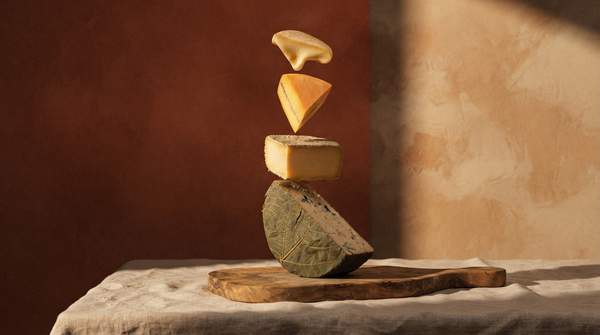
The fastest route to a cheese board that feels considered rather than assembled is pairing by logic, not luck. Wisconsin Cheese, the trade group behind the state's dairy industry, makes the case plainly: just as cheddar meets apple pie, the right preserve elevates a cheese so the combination becomes "greater than the sum of its parts." Below are four named American artisan cheeses and the specific preserves to set beside them, drawn from producer and expert recommendations, with the reasoning behind each match made explicit.
Your Guide to American Artisan Cheese & Preserve Pairings
This comparison sorts four pairings by cheese, region, flavor profile and the pairing principle that drives each match—whether contrast, complement, or regional kinship—so you can see at a glance why each one works and choose accordingly.
| Artisan Cheese & Region | Cheese Profile | Recommended Preserve Pairing | Flavor Rationale |
|---|---|---|---|
| Marieke Gouda (Wisconsin) | Classic caramel and butterscotch notes | Apricot preserves | Sweet-tart apricot balances the cheese's caramel sweetness; preserves add more fruit per bite than jam or jelly, varying the texture |
| Carr Valley Bread Cheese (Wisconsin) | Mild, traditional Scandinavian-style juustoleipa | Strawberry-rhubarb jam | Sweet-tart jam gives the mild, squeaky cheese a bright counterpoint on the contrast principle |
| Cabot Cheddar (Vermont) | Sharp and robust | Apple jalapeño jelly | Sweet-and-spicy jelly contrasts with the cheddar's bite, echoing the classic cheddar-and-apple affinity |
| Jasper Hill Farm Bayley Hazen Blue (Vermont) | Fudge-like texture; toasted-nut sweetness, anise spice, subdued pepper; grassy, nutty milk flavors | Hot pepper cranberry jelly | Sweet, intensely flavored preserves complement strong blue cheeses and stand up to Bayley's richness |
Two of these pairings are explicit recommendations from Wisconsin Cheese; the Jasper Hill Farm pairing rests on the producer's own stated sensory profile plus the general expert principle that intense, sweet accompaniments suit strong blue cheeses. The Cabot row follows the same contrast logic applied to a sharp cheddar, and the specific cheeses' availability will vary by location, so treat the table as a template as much as a shopping list.
Understanding the Art of Cheese and Preserve Pairing
Three principles govern nearly every successful match in the table above, and each one is portable to your own experiments.
Match the intensity. Wisconsin Cheese's pairing advice divides cheeses into two camps: soft, sweet cheeses want "more bitter preserves or a spicy jam," while bold aged cheeses "marry well with sweet jams and jelly." That logic runs through every row above. Apricot's tartness checks Marieke Gouda's caramel sweetness; strawberry-rhubarb's sweet-tart push keeps mild bread cheese from tasting flat; and sweet, fiery jellies give sharp cheddar and rich blue something to push against.
Let what grows together go together. "The phrase 'what grows together goes together' can be a useful tool when pairing cheese and fruit," writes Stacy Brooks at The Cheese Professor, quoting educator Vanessa Tilaka: "Anything that is from that same region should go together." Cheese Grotto makes the same point in terroir terms—artisan cheese expresses a "unique taste of place," which is why Loire goat cheeses traditionally meet Sauternes—and notes that "this principle extends to American artisan cheeses, too." Vermont cheddar with apple jelly is the American textbook case: cheddar country is apple country.
Use sweetness to balance strength, not fight it. Cheese Grotto's accompaniment scale ranks tomato jam and dried figs as "much more intense" pairings reserved for strong blue cheeses, while gentler foods suit delicate chèvre. Sweet pairings work against salty blue cheese the way a full-bodied red does, "tend[ing] to work really well, too." A hot pepper cranberry jelly does that job for Bayley Hazen Blue while doubling down on its spice.
Building Your Balanced Cheese Board
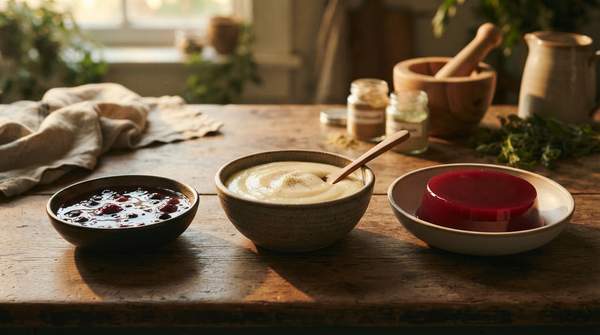
With four pairings in hand, balance becomes a matter of deliberate contrast. Serve at least one soft, sweet cheese and one bold one so the board has range: Marieke Gouda and Bayley Hazen Blue sit at opposite ends of the intensity spectrum, which is exactly what you want. Keep each preserve in its own small dish with its own spoon, and set it directly beside its cheese so guests understand the pairing is intentional.
Texture deserves as much thought as flavor. Wisconsin Cheese points out that preserves carry "more fruit packed in every bite than jam or jelly, which adds a nice variety in texture"—part of why apricot preserves rather than apricot jam earns the spot next to Marieke. Bread cheese's warm, squeaky character and Bayley Hazen Blue's fudge-like density, which Jasper Hill Farm describes as "dense and creamy, with well-distributed blue veins," give the board three distinct mouthfeels before you add a single cracker.
Finally, lean regional when you can. The Vermont rows—cheddar with apple jalapeño jelly, blue with cranberry—model the terroir principle in miniature. If your market stocks a local preserve-maker, their stone fruit or berry offerings are the natural first stop for whatever regional cheese sits beside them.
Crafting Your Confident Cheese Board
The decision in front of you: select at least two distinct regional American artisan cheese and fruit preserve pairings from this guide, considering both complementary and contrasting flavor profiles, to build a sophisticated and balanced cheese board. Two cheeses from different rows—one sweet-tempered, one bold—plus their matched preserves is the minimum viable board; all four is a full tasting progression from Wisconsin caramel to Vermont blue.
Your measurable indicator is simple and honest: a visually appealing cheese board featuring the selected cheeses and preserves, with positive feedback from tasters on the balance and complexity of flavors. If the Marieke-apricot bite tastes one-note, the fix is a tarter preserve; if the blue overwhelms, reach for a sweeter jelly. The principles above tell you which dial to turn—so shop for the four cheeses, set out the preserves, and let your guests confirm what the flavor logic already promised.
Sources
- Pairing Jams And Jellies With Cheese — Wisconsin Cheese
- BAYLEY HAZEN BLUE — Jasper Hill Farm
- How to Pair Cheese and Fruit — The Cheese Professor
- How to Pair Cheese — Cheese Grotto