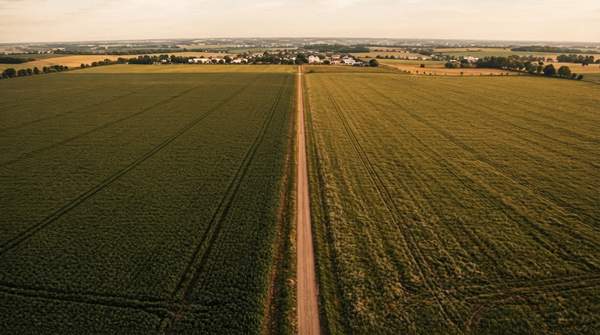
On a small farm in rural Vermont, a farmer now monitors soil moisture and controls irrigation from a smartphone app, a stark contrast to the rising fuel and fertilizer bills threatening his livelihood. This isn't just a tech upgrade; it's a fundamental shift in how New England farms fight for survival.
New England farmers are grappling with soaring operational costs, yet they're simultaneously pouring capital into advanced technologies for efficient resource management. This isn't a simple choice; it's a high-stakes gamble, creating immediate financial strain for the promise of long-term resilience.
The path ahead for New England farming appears bifurcated: a widening chasm between tech-enabled, robust operations and traditional farms struggling to adapt. This divergence will likely force consolidation or radical diversification, reshaping the very landscape of our food production.
Who Feels the Pinch: The Farmers on the Front Lines
The stark reality for New England farmers is that capital dictates survival. Farms already struggling financially face immense hurdles in adopting efficient resource management, even as advanced drip irrigation becomes a standard practice for many operations, according to Boston 25 News. This isn't about gaining an edge anymore; it's about maintaining viability. Smaller, traditional farms, often lacking the initial investment for smartphone-controlled irrigation systems, are left vulnerable to higher water usage and escalating operational expenses. Without access to crucial tools like soil moisture sensors or mini-weather stations, these operations cannot optimize water application, leading to avoidable waste and inflated costs. The implication is clear: technology, once a luxury, is now a non-negotiable entry fee, threatening to squeeze out those without the means to invest.
Adapting to Survive: Technology and Innovation
Farmers across New England aren't just embracing precision agriculture; they're deploying it as a strategic defense against economic headwinds. Drip irrigation, managed by smartphone apps and informed by soil moisture sensors and mini-weather stations, is rapidly becoming the benchmark for resource management and water conservation, reports Boston 25 News. This isn't merely an efficiency upgrade; it's a mandatory survival mechanism. While smart irrigation offers a critical lifeline, its emerging status as a baseline operational cost profoundly shifts the landscape. It means smaller farms without the capital for such investments face an existential threat, deepening the economic divides within rural communities. Embracing these technologies provides a clear path to optimize resource use and slash long-term operational expenses, but it simultaneously erects a formidable financial barrier for anyone hoping to enter or sustain farming.