Homemade dog food can absolutely support a healthy, thriving dog. But the veterinary research is blunt about the catch: the overwhelming majority of recipes owners find and follow on their own do not meet established canine nutrition standards. In what is thought to be the largest ever nutritional evaluation of home-prepared dog food recipes, researchers found that of 200 recipes analyzed, very few provided all essential nutrients in amounts adequate for canine health, as reported in a UC Davis study published in the Journal of the American Veterinary Medical Association. The gap between good intentions and nutritional completeness is where homemade diets go wrong—and the consequences are not abstract.
The Appeal and Hidden Dangers of Homemade Dog Diets
Owners turn to homemade food for reasons that are easy to sympathize with. As Jennifer Larsen, a clinical nutrition professor at UC Davis's veterinary school, explained, some feel they have better control over the animal's diet, some want a more natural food, and some simply don't trust pet food companies. Veterinary literature also recognizes genuine clinical uses: a carefully constructed homemade diet can help a veterinarian assess a patient's response to dietary changes when diagnosing food allergies or managing chronic intestinal disease.
But control is only an advantage when the person controlling the diet knows exactly what the diet requires. Texas A&M researchers, analyzing recipes collected through the Dog Aging Project, concluded that most homemade dog diets are not nutritionally complete. That finding turns a well-meaning act of care into a slow-acting health risk, because deficiencies and excesses reveal themselves over weeks and months rather than at a single meal.
Understanding the Risks: Nutrient Imbalances in Homemade Dog Diets
The core problem with unguided recipes is that every component carries a job, and omitting or substituting one changes the whole. As Texas A&M's Dr. Katie Tolbert put it, nothing in a canine diet is a "filler" that you can leave out. The table below traces how specific formulation mistakes translate into documented health outcomes, drawing on veterinary school findings.
| Nutrient/Component | Role in the Body | Documented Risk of Imbalance |
|---|---|---|
| Calcium and phosphate | Balance between these minerals is crucial for bone health and overall physiological function | When out of balance, dogs can develop bone health problems including "rubber jaw," where bone softens like cartilage, as well as kidney problems |
| Vitamin D | Critical for calcium metabolism, per veterinary guidance on homemade diets | Tends to run low in homemade diets unless deliberately supplemented |
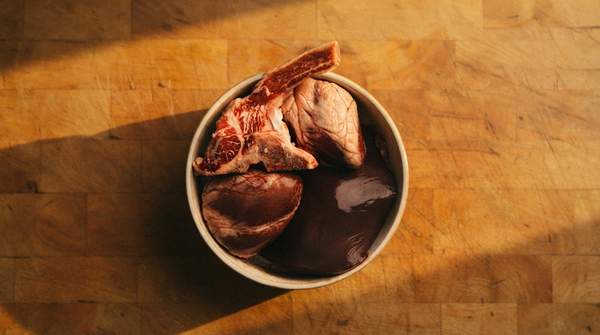
| Fat-soluble vitamins (beyond D) | Provided by ingredients such as liver | Excess vitamin A can result from feeding too much liver; deficiency can occur without supplementation |
| Ingredient substitutions generally | Each ingredient contributes to the diet's overall completeness | Swapping one oil for another, for example, can change the nutritional completeness of the entire diet, Texas A&M researchers caution |
The "rubber jaw" example deserves emphasis because it shows how mundane an omission can be. A calcium supplement is one of the most common additions in homemade dog food recipes—and, as Tolbert noted, it can cause serious problems if omitted, because calcium and phosphate levels moving out of balance undermine the skeleton itself. The mistake is small; the pathology is severe.
Why Unverified Online Recipes Fall Short
Why can't owners simply find a well-reviewed recipe online? The UC Davis evaluation gives the clearest answer: across 200 recipes—presumably popular ones, since they were gathered for a nutritional assessment—very few delivered all essential nutrients in adequate amounts. A recipe can look complete, be praised in comments, and still leave a dog short on minerals or vitamins that are invisible in a bowl of food.
Veterinary writers also warn against the opposite error: excess. Too much liver can overshoot the dog's vitamin A needs, in the view of veterinary guidance on homemade diets, while ingredient substitutions and imprecise measuring introduce their own drift. Texas A&M's guidance adds a further layer: unsafe ingredients like grapes, which are toxic to dogs, and whole bones, which can leave sharp fragments in the stomach. Precision is not fussiness in this context—it is the difference between nourishment and harm.
For dogs with existing illness, the stakes climb further. Tolbert cautions that dogs not already in good health can have exacerbated symptoms without a balanced diet specifically formulated to treat their disease, which is a level of design no general-purpose recipe can deliver.
The Essential Role of Professional Veterinary Guidance
The safe path is shorter than most owners expect. The first step, according to Texas A&M, is a conversation with your local veterinarian about your pet's specific dietary needs. For full formulation, veterinary sources recommend working with a board-certified veterinary nutritionist rather than drafting the diet solo—the same conclusion the UC Davis findings drive, since recipe authors rarely have credentials or testing behind their nutrient levels.
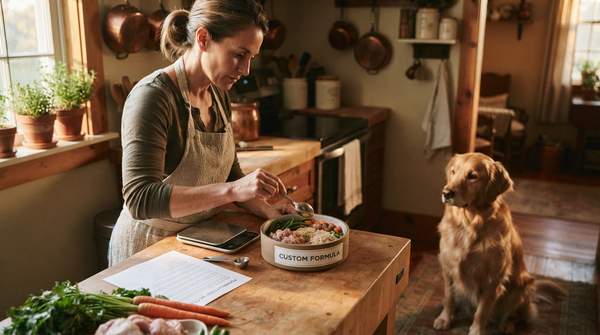
Professional involvement also extends past the initial plan. Veterinary guidance on homemade diets suggests monitoring over time: nutrient panels, body condition checks and stool quality assessments at six- to twelve-month intervals, with recipe adjustments for life stage and activity. Practical hygiene—proper cooking and storage—prevents bacterial risks, and weighing ingredients on a scale rather than using volume cups keeps the ratios the nutritionist designed from drifting at the kitchen counter.
None of this means homemade feeding is a bad idea. It means the diet is a medical instrument as much as a meal, and it deserves the same standard of evidence as any other intervention in your dog's health.
Prioritizing Your Dog's Health: Seek Expert Nutritional Guidance
The decision this evidence points to is straightforward: owners considering homemade dog diets must consult a board-certified veterinary nutritionist to formulate a nutritionally complete and safe diet, rather than relying on unverified online recipes. The measurable indicator of success is a formulated diet plan provided by a veterinary nutritionist, tailored to the individual dog's needs—ideally paired with follow-up nutrient panels and body condition checks every six to twelve months. Between the UC Davis finding that most recipes fail nutritional standards and the Texas A&M finding that imbalances can soften a dog's jaw and damage the kidneys, the case for expert formulation is not cautionary boilerplate. It is the whole diet, done safely.
Sources
- Homemade dog food recipes can be risky business, study finds — UC Davis
- Most Homemade Dog Diets Are Not Nutritionally Complete, Texas A&M Researchers Find — Veterinary Medicine & Biomedical Sciences
- Balanced Homemade Dog Food 2025: Vet's Complete Recipe Tips 🍗🐶 — Ask A Vet
- Homemade Diet as a Paramount for Dogs’ Health: A Descriptive Analysis - PMC